
EXCLUSIVE: Chinese nationals worked INSIDE U.S. congressional offices through a program participants described as “citizen external propaganda.”
They answered American constituents, attended policy briefings and even drafted speeches for members of Congress.

They answered American constituents, attended policy briefings and even drafted speeches for members of Congress.
The group behind the pipeline later became the US Heartland China Association.
Its Chinese partners include groups belonging to the CCP’s “influence and intelligence bureaucracy.”
Congress is now investigating USHCA for possible covert PRC influence.
Its Chinese partners include groups belonging to the CCP’s “influence and intelligence bureaucracy.”
Congress is now investigating USHCA for possible covert PRC influence.
One of those partners is the Chinese People’s Association for Friendship with Foreign Countries.
The U.S. government says CPAFFC is tasked with “co-opting subnational governments” and has sought to “directly and malignly influence” American officials to advance Beijing’s agenda.
The U.S. government says CPAFFC is tasked with “co-opting subnational governments” and has sought to “directly and malignly influence” American officials to advance Beijing’s agenda.
Now look at what the pipeline was actually doing.
Beijing International Studies University student Zhang Xiaoyi called her congressional placement an opportunity for “citizen external propaganda” — 外宣, or external propaganda directed at audiences outside China.
Beijing International Studies University student Zhang Xiaoyi called her congressional placement an opportunity for “citizen external propaganda” — 外宣, or external propaganda directed at audiences outside China.
Zhang said Chinese students could use the placements to speak in their own voices so American lawmakers would understand “the real China.”
Chinese state media itself promoted her description of the congressional internship as “citizen external propaganda.”
Chinese state media itself promoted her description of the congressional internship as “citizen external propaganda.”
And these students were not just observing Congress.
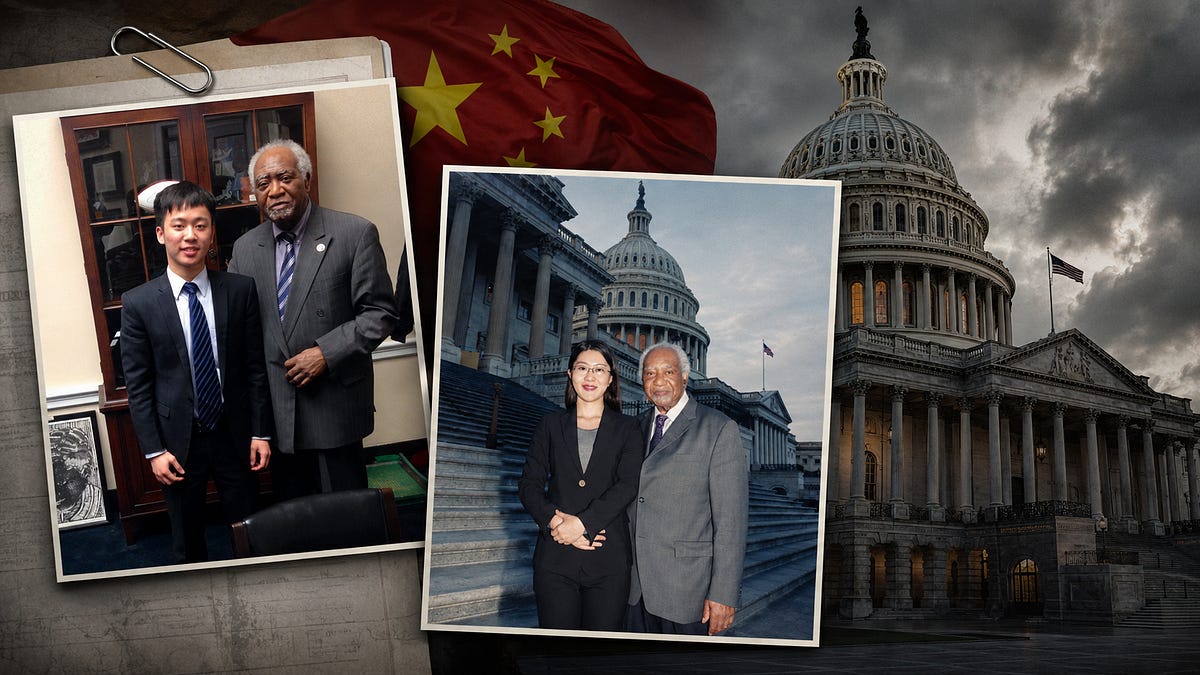
Peking University law student Deng Zhicong interned in Rep. Danny K. Davis’s office in 2015.
By his SECOND WEEK, Deng says he was drafting responses to AMERICAN CONSTITUENTS on active policy fights.

Peking University law student Deng Zhicong interned in Rep. Danny K. Davis’s office in 2015.
By his SECOND WEEK, Deng says he was drafting responses to AMERICAN CONSTITUENTS on active policy fights.
Deng was also dispatched to congressional policy briefings and ordered to write memos summarizing them.
He described the briefings as forums intended to provide guidance for legislation and “influence the legislative process.”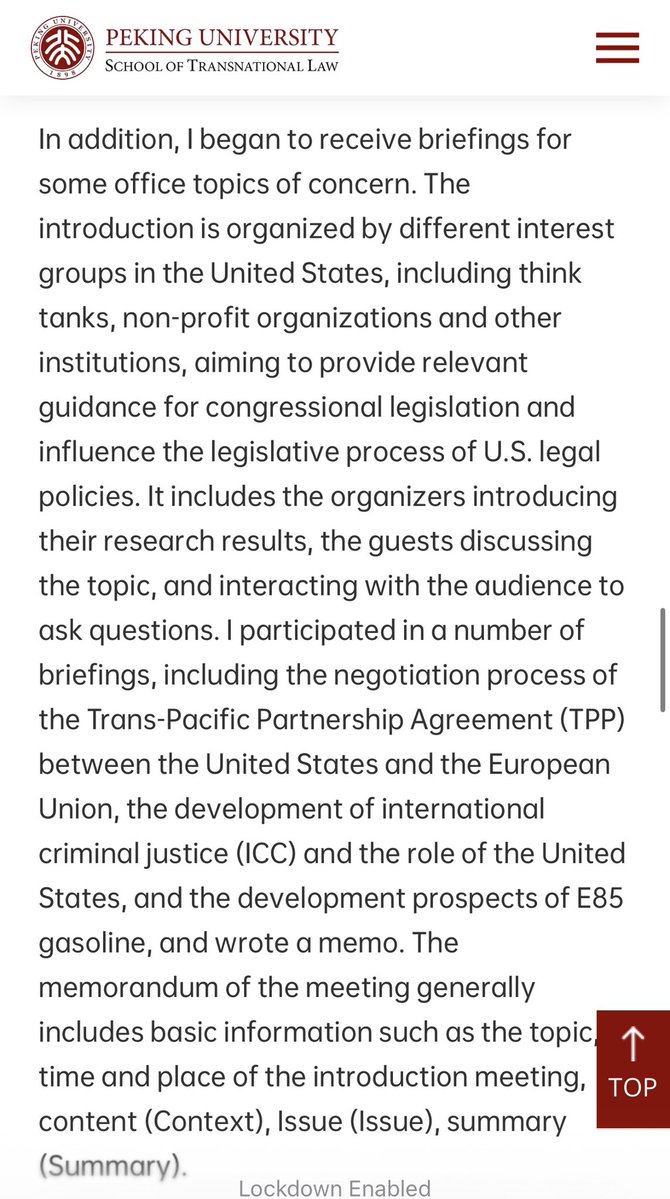
He described the briefings as forums intended to provide guidance for legislation and “influence the legislative process.”
His assignments included major U.S. trade negotiations in Asia with enormous implications for China.
Then Deng says he “gradually gain[ed] the trust” of Davis’s staff.
That trust brought “more challenging” work:
DRAFTING SPEECHES FOR THE CONGRESSMAN.
Then Deng says he “gradually gain[ed] the trust” of Davis’s staff.
That trust brought “more challenging” work:
DRAFTING SPEECHES FOR THE CONGRESSMAN.
For one speech involving proposed Medicare legislation, Deng says he researched detention statistics, acquittal rates, bail and elderly defendants to construct the argument for changing legislative language.
And Davis’s office appears AGAIN AND AGAIN in Chinese records.
Renmin University student Yiyang “Eon” Lan says he worked there in 2016, preparing memoranda and discussing potential policy solutions with congressional staff.
Renmin University student Yiyang “Eon” Lan says he worked there in 2016, preparing memoranda and discussing potential policy solutions with congressional staff.
Beijing International Studies University student Jiang Zhizhao followed in 2017.
Her duties included attending congressional briefings and hearings, researching policy issues, writing memoranda and communicating with OTHER congressional offices.
Her duties included attending congressional briefings and hearings, researching policy issues, writing memoranda and communicating with OTHER congressional offices.
Then there’s Xin Qiang — and his trajectory shows exactly why this access matters.
Fudan University says Xin worked as a legislative assistant to Rep. Jim McDermott from 2001-2002, handling legislative recommendations and policy evaluations involving U.S.-China relations and American foreign policy.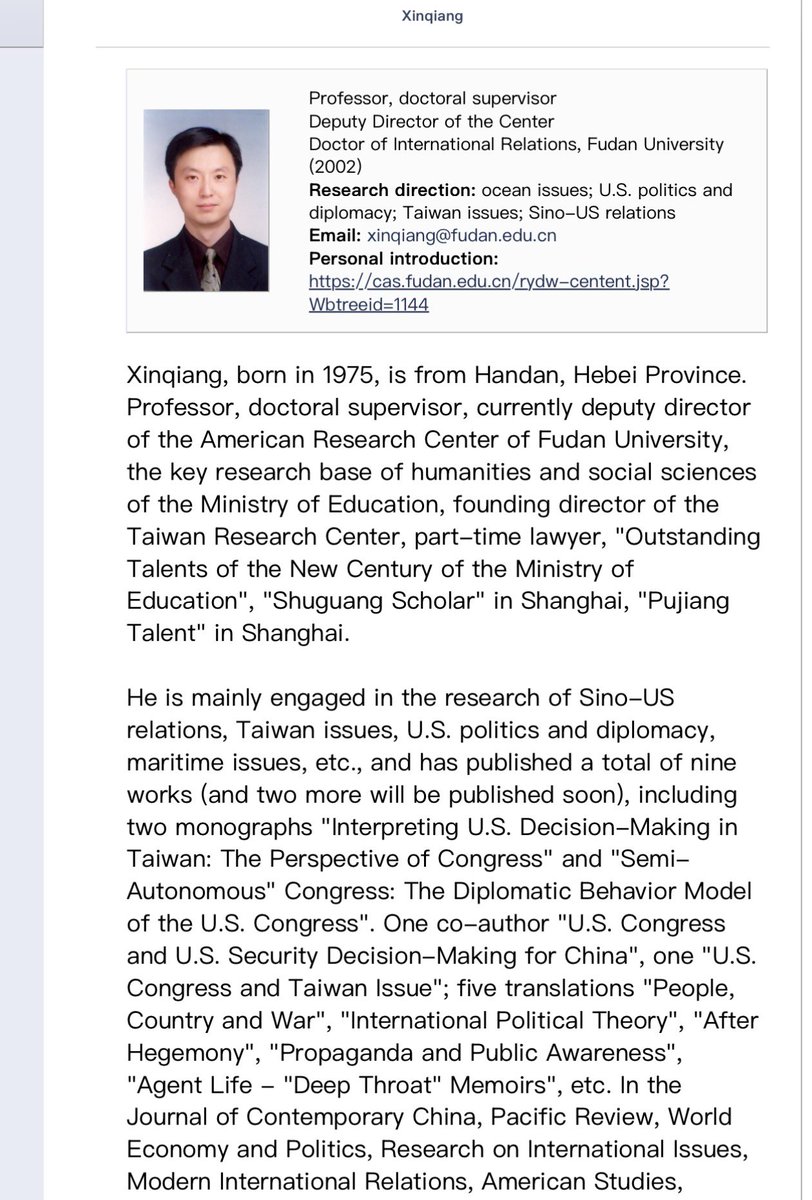
Fudan University says Xin worked as a legislative assistant to Rep. Jim McDermott from 2001-2002, handling legislative recommendations and policy evaluations involving U.S.-China relations and American foreign policy.
Xin returned to China and became an expert on the institution he had just observed from INSIDE.
His work includes:
“The U.S. Congress and the Taiwan Issue”
“U.S. Congress and U.S.-China Relations”
And U.S. Taiwan policymaking “from a Congressional perspective.”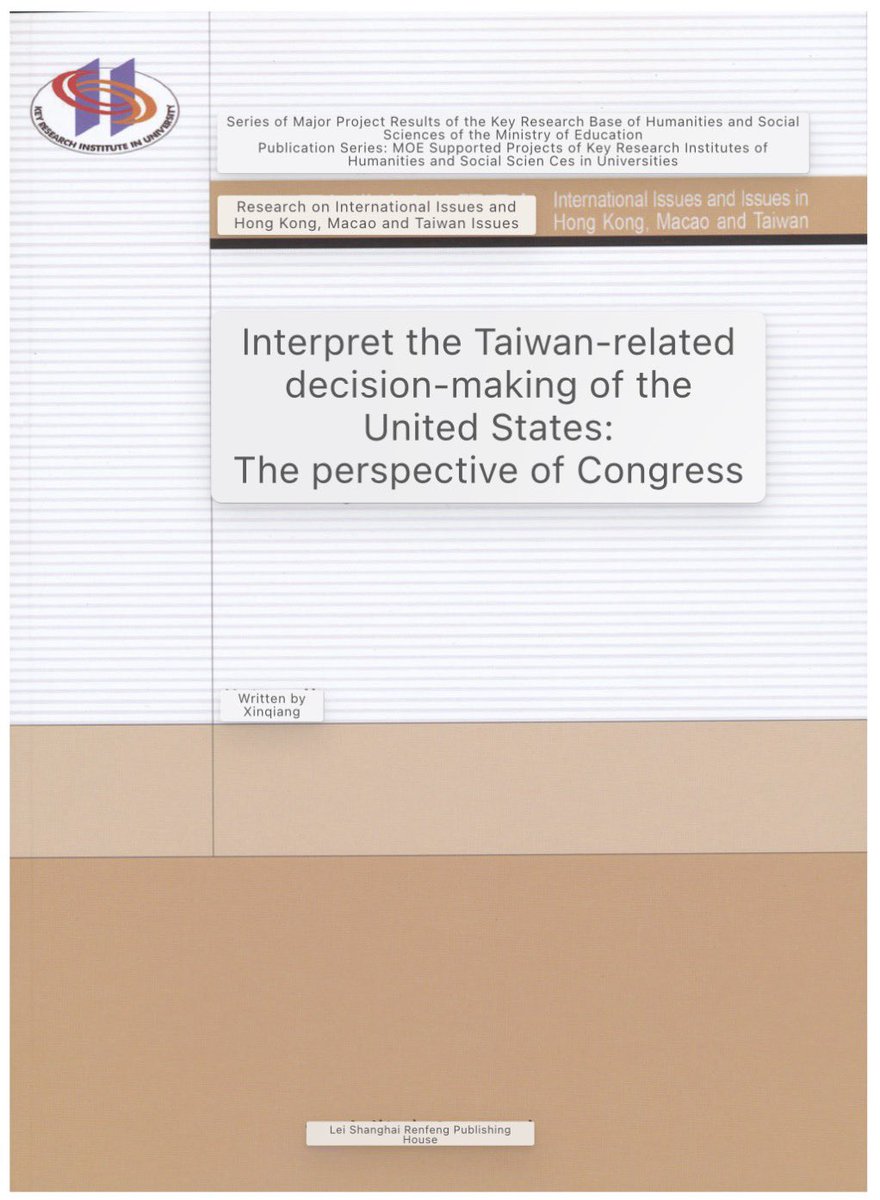

His work includes:
“The U.S. Congress and the Taiwan Issue”
“U.S. Congress and U.S.-China Relations”
And U.S. Taiwan policymaking “from a Congressional perspective.”
Then his congressional expertise began serving the Chinese state.
Fudan says Xin conducted commissioned research for China’s MINISTRY OF PUBLIC SECURITY, the CCP Central Taiwan Affairs Office, State Council Taiwan Affairs Office and Shanghai’s external-propaganda authorities.
Fudan says Xin conducted commissioned research for China’s MINISTRY OF PUBLIC SECURITY, the CCP Central Taiwan Affairs Office, State Council Taiwan Affairs Office and Shanghai’s external-propaganda authorities.
His projects included:
“U.S. Congressional Foreign Affairs and the Taiwan Issue”
“U.S. Congress and U.S.-China Relations”
Countering Taiwan independence
And Chinese strategy in response to American competition in the Western Pacific.

“U.S. Congressional Foreign Affairs and the Taiwan Issue”
“U.S. Congress and U.S.-China Relations”
Countering Taiwan independence
And Chinese strategy in response to American competition in the Western Pacific.
Fudan says Xin’s policy reports repeatedly received favorable instructions from senior Party and state leaders.
Chinese state media has continued citing his experience as a congressional legislative assistant when using him to explain and criticize the U.S. political system.
Chinese state media has continued citing his experience as a congressional legislative assistant when using him to explain and criticize the U.S. political system.
None of this was a handful of Chinese students independently finding internships.
Communication University of China records describe a formal “U.S. Government Internship Program” offering placements specifically in “Washington congressional offices.”

Communication University of China records describe a formal “U.S. Government Internship Program” offering placements specifically in “Washington congressional offices.”
Chinese universities screened applicants.
The Midwest U.S.-China Association interviewed them.
Students selected preferred government offices.
The association and participating offices determined final placements.
It was a PIPELINE into American government.
The Midwest U.S.-China Association interviewed them.
Students selected preferred government offices.
The association and participating offices determined final placements.
It was a PIPELINE into American government.
And it operated for YEARS.
CUC was promoting the program by 2016 and was still advertising congressional placements in 2020.
Renmin University also participated and discussed EXPANDING the number of U.S. government internship positions available to its students.
CUC was promoting the program by 2016 and was still advertising congressional placements in 2020.
Renmin University also participated and discussed EXPANDING the number of U.S. government internship positions available to its students.
The organization running that pipeline later became USHCA.
In April, Congress opened an investigation under suspicion it was operating as an unregistered PRC agent or facilitating covert Chinese influence in America.
In April, Congress opened an investigation under suspicion it was operating as an unregistered PRC agent or facilitating covert Chinese influence in America.
Congress specifically cited USHCA’s work with Chinese organizations tied to Beijing’s United Front apparatus.
One partner, CPAFFC, has been accused by the U.S. government of trying to “directly and malignly influence” American officials.
One partner, CPAFFC, has been accused by the U.S. government of trying to “directly and malignly influence” American officials.
This is only part of what I found.
Read the full investigation — and subscribe for the documents, names and additional findings I only share with subscribers:
nataliegwinters.substack.com/p/exc-chinas-c…
Read the full investigation — and subscribe for the documents, names and additional findings I only share with subscribers:
nataliegwinters.substack.com/p/exc-chinas-c…
EXC: China’s “Citizen External Propaganda” Pipeline Put Chinese Nationals Inside Congress. They Wrote Lawmaker Speeches, Researched Policy and Responded to American Constituents.Some interns later became Beijing’s experts on Congress.https://nataliegwinters.substack.com/p/exc-chinas-citizen-external-propaganda
• • •

Replies
Good grief, how stupid can we be?