

NEW: A disabled woman is suing homeless services in Portland, Oregon, after she was denied rent relief due to her low score on the city's race-based prioritization rubric, which awards more points for requesting "culturally specific services" than for having a disability.🧵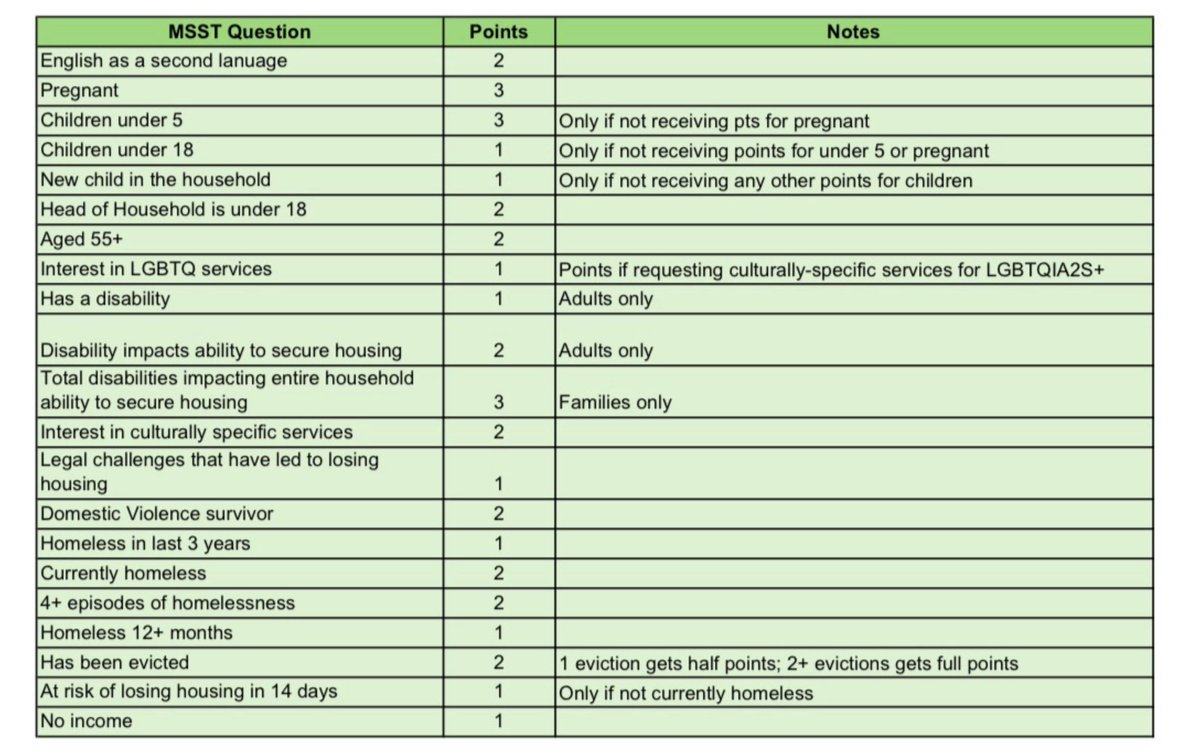
Michele Mei, a white woman with cerebrovascular disease, filed the lawsuit after she was told that she did not meet the cutoff for housing assistance, Fox 12 Oregon reported last month.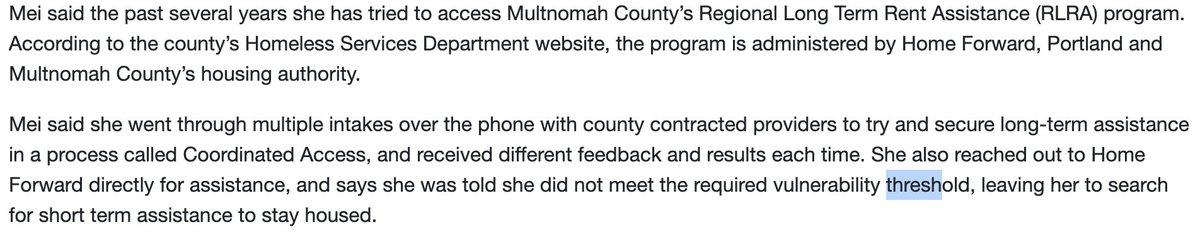
Portland (Multnomah County) uses a points-based rubric to prioritize applicants for housing assistance. Under the rubric, obtained exclusively by the Free Beacon, having a disability only counts for 1 point, whereas "interest in culturally specific services" counts for 2.
Though the rubric awards extra points when the disability impacts access to housing, it awards even more to gay, lesbian, bisexual, or transgender people who speak English as a second language, meaning that identity factors can outweigh disability status.
Mei, who is suing under the Americans with Disabilities Act, is an example of the costs of that system. Though her lawsuit does not allege racial discrimination, she would have had better odds of obtaining rent relief had she been black, LGBT, or a non-native English speaker.
The case illustrates how, in a zero-sum competition for resources, prioritizing one group necessarily comes at the expense of others, pitting protected classes against one another.
"Adding points for race may seem politically savvy, but it harms people—labeling them by immutable characteristics instead of assessing individual need," said Caitlyn Kinard, an attorney at the Pacific Legal Foundation.
"The result: people with disabilities in Multnomah County are now finding it harder to access resources."
A spokeswoman for Multnomah County, Denise Theriault, said that the county "complies with all Fair Housing Act and anti-discrimination laws."
A spokeswoman for Multnomah County, Denise Theriault, said that the county "complies with all Fair Housing Act and anti-discrimination laws."
Multnomah County, you may recall, has numerous apartments that provide "culturally specific housing" to "BIPOC" residents. Placements in those buildings are determined by Multnomah's coordinated access process, the same system Mei used.
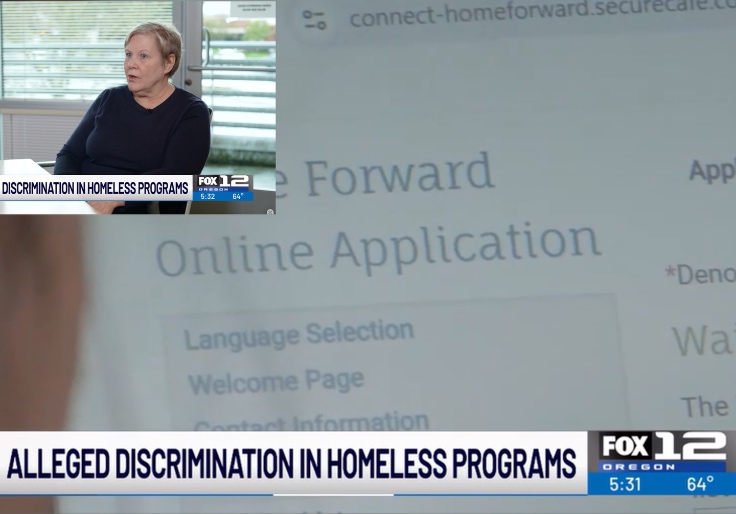
Redesigned in 2024 in order to "promote equity," the process prioritizes "BIPOC households, LGBTQIA2S+, [and] people with disabilities." But Mei says the housing department refused to meet with her for an in-person assessment, making it difficult for her to navigate the process.
Mei, who says she has been on the brink of homelessness since she fled an abusive marriage in 2018, added that rent relief would have spared her years of instability.
"I wouldn't have had to move a whole bunch of times," she said. "I wouldn't feel the threat of eviction."
"I wouldn't have had to move a whole bunch of times," she said. "I wouldn't feel the threat of eviction."
Tldr: The race-based allocation of homeless services isn't just an affront to the rule of law. It also makes it harder for disabled people to receive housing, insofar as they must compete with minorities for priority.
Read the full story here:
Read the full story here:
Disabled Woman Sues Multnomah County After Race-Based Program Denies Her Rent ReliefA disabled woman is suing the homeless services department in Multnomah County, Oregon, after she was denied rent relief due to her low score on the county's race-based prioritization rubric, which aw…https://freebeacon.com/america/disabled-woman-sues-multnomah-county-after-race-based-program-denies-her-rent-relief/
• • •

Replies
This is just plain wrong.