
EXCLUSIVE: I found dozens of taxpayer-funded researchers who worked on Pentagon defense projects or in U.S. weapons labs.
They later went to work for China’s military—including its nuclear-weapons complex and blacklisted military universities.
Here are their names. 🧵
They later went to work for China’s military—including its nuclear-weapons complex and blacklisted military universities.
Here are their names. 🧵
YANQIANG YANG
2000–04: At the University of Illinois, Yang worked on three U.S. Army and Air Force-funded projects worth $1.276 million combined. The work included research on explosives.
2026: Yang published new research on the powerful HMX explosive from a laboratory inside the China Academy of Engineering Physics—the heart of China’s nuclear-weapons complex
2000–04: At the University of Illinois, Yang worked on three U.S. Army and Air Force-funded projects worth $1.276 million combined. The work included research on explosives.
2026: Yang published new research on the powerful HMX explosive from a laboratory inside the China Academy of Engineering Physics—the heart of China’s nuclear-weapons complex
XIANXU ZHENG
2012: Zheng conducted high-speed shock research at the University of Illinois with support from the U.S. Army, Air Force, Defense Threat Reduction Agency and an American nuclear-stockpile program.
Today: Zheng is a deputy director inside the China Academy of Engineering Physics.
His recent work there includes RDX-based explosives and the effects of underwater explosions.
2012: Zheng conducted high-speed shock research at the University of Illinois with support from the U.S. Army, Air Force, Defense Threat Reduction Agency and an American nuclear-stockpile program.
Today: Zheng is a deputy director inside the China Academy of Engineering Physics.
His recent work there includes RDX-based explosives and the effects of underwater explosions.
TINGTING ZHOU
Between 2009 and 2018, Zhou published research on explosive sensitivity and detonation with support from the U.S. Navy.
By 2016, she was publishing work in China on the military explosive PBX-9501 with support from a China Academy of Engineering Physics ammunition center.
Zhou now works inside China’s nuclear-weapons complex.

Between 2009 and 2018, Zhou published research on explosive sensitivity and detonation with support from the U.S. Navy.
By 2016, she was publishing work in China on the military explosive PBX-9501 with support from a China Academy of Engineering Physics ammunition center.
Zhou now works inside China’s nuclear-weapons complex.
YIYING ZHAO
2006–07: At the University of Michigan, Zhao worked on optical-device research backed by the U.S. Navy and Air Force.
2015: She joined the Materials Institute of the China Academy of Engineering Physics.
Her biography now lists leadership roles in a military-civil-fusion radiation-detector project and a 19.8-million-yuan tritium project.
It also says isotope batteries have strategic uses in military, space and deep-sea missions.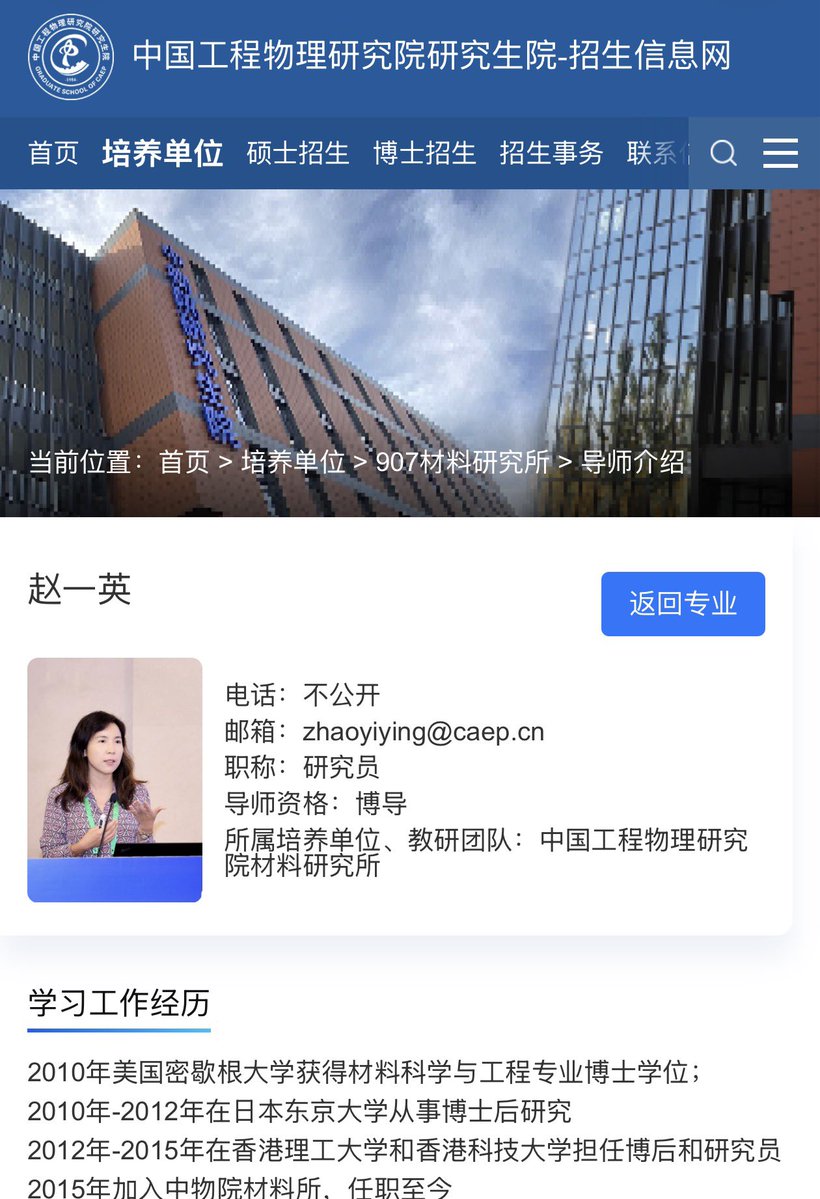
2006–07: At the University of Michigan, Zhao worked on optical-device research backed by the U.S. Navy and Air Force.
2015: She joined the Materials Institute of the China Academy of Engineering Physics.
Her biography now lists leadership roles in a military-civil-fusion radiation-detector project and a 19.8-million-yuan tritium project.
It also says isotope batteries have strategic uses in military, space and deep-sea missions.
HUIKAI XIE
2007–09: Xie spent three summers researching at the U.S. Air Force Research Laboratory.
2008: He received an award from the Pentagon’s advanced-research agency.
2018–21: He co-led a $785,000 Navy project developing laser-mapping technology.
2020: Xie moved to the Beijing Institute of Technology. The U.S. blacklisted it that December.
He then led a Chinese military technology commission project on three-dimensional optical imaging and became a research-center chief scientist.
2007–09: Xie spent three summers researching at the U.S. Air Force Research Laboratory.
2008: He received an award from the Pentagon’s advanced-research agency.
2018–21: He co-led a $785,000 Navy project developing laser-mapping technology.
2020: Xie moved to the Beijing Institute of Technology. The U.S. blacklisted it that December.
He then led a Chinese military technology commission project on three-dimensional optical imaging and became a research-center chief scientist.
YUE JIANG
2020–22: At Stanford, Jiang led U.S. Navy-backed research on aluminum combustion and nanothermites—energetic materials that can produce extremely fast, intense reactions.
March 2023: The U.S. blacklisted Beihang University.
September 2023: Jiang joined Beihang’s rocket-propulsion department.
Jiang now works on rocket propellants, metal fuels and energetic materials—and teaches “Rocket Engine Propellants” and “Rocket Power.”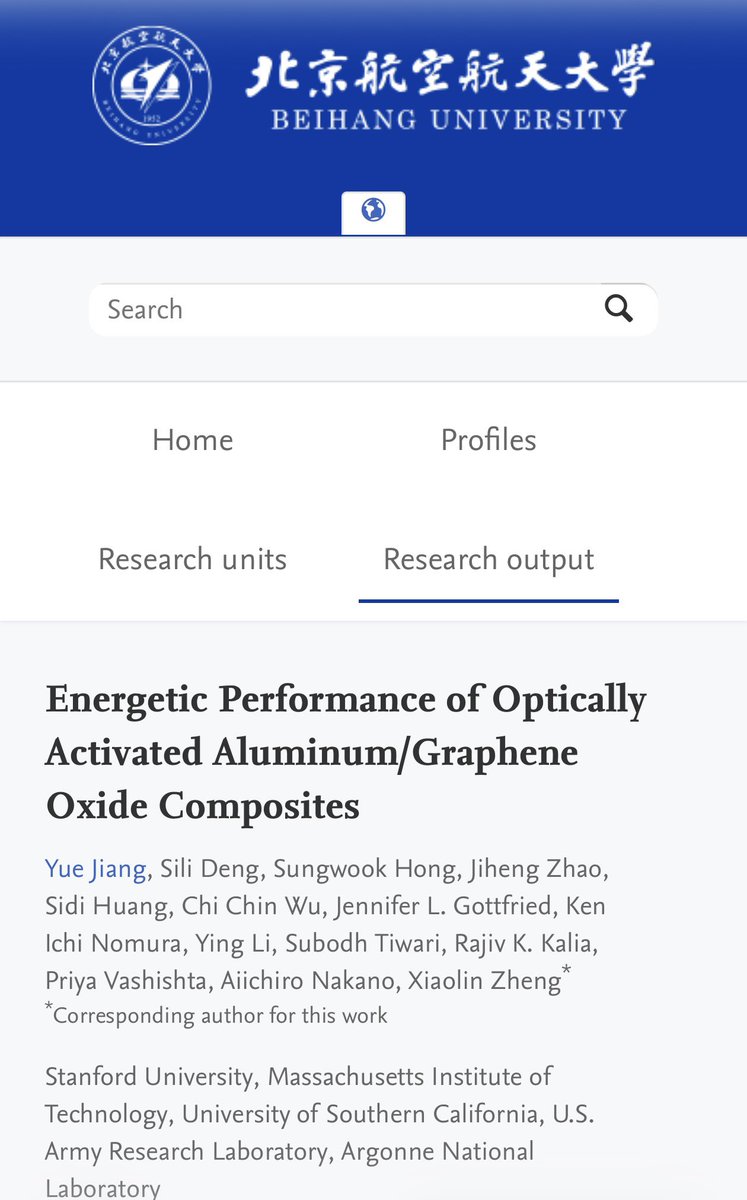
2020–22: At Stanford, Jiang led U.S. Navy-backed research on aluminum combustion and nanothermites—energetic materials that can produce extremely fast, intense reactions.
March 2023: The U.S. blacklisted Beihang University.
September 2023: Jiang joined Beihang’s rocket-propulsion department.
Jiang now works on rocket propellants, metal fuels and energetic materials—and teaches “Rocket Engine Propellants” and “Rocket Power.”
JIAHENG ZHANG
2013–16: Zhang conducted explosives research backed by the U.S. Navy and Defense Threat Reduction Agency.
June 2017: He joined China’s Harbin Institute of Technology.
June 2020: The U.S. blacklisted the university, citing Chinese military ties and efforts to acquire American technology for missile programs.
Zhang later published research on hypergolic fuels—propellants that ignite immediately upon contact.
2013–16: Zhang conducted explosives research backed by the U.S. Navy and Defense Threat Reduction Agency.
June 2017: He joined China’s Harbin Institute of Technology.
June 2020: The U.S. blacklisted the university, citing Chinese military ties and efforts to acquire American technology for missile programs.
Zhang later published research on hypergolic fuels—propellants that ignite immediately upon contact.
YING SHEN
2013: At Virginia Tech, Shen led U.S. Navy-funded sensor research with a Naval Undersea Warfare Center scientist.
The paper said the technology could be used to search for metallic targets.
2017: Shen became a professor at Harbin Engineering University.
2020: The U.S. blacklisted the university.
2025: Shen published research on detecting unexploded bombs and small underwater targets.

2013: At Virginia Tech, Shen led U.S. Navy-funded sensor research with a Naval Undersea Warfare Center scientist.
The paper said the technology could be used to search for metallic targets.
2017: Shen became a professor at Harbin Engineering University.
2020: The U.S. blacklisted the university.
2025: Shen published research on detecting unexploded bombs and small underwater targets.
JINLING GAO
2017–22: At Purdue, Gao participated in two U.S. Army projects involving protective textiles and detecting damage inside reinforced materials.
April 2022: Gao joined Nanjing University of Aeronautics and Astronautics.
Gao’s official profile now lists a protective-structure project for a Chinese naval equipment institute.
It also lists leadership of a 2022–24 Chinese Central Military Commission project involving high-performance woven materials.
2017–22: At Purdue, Gao participated in two U.S. Army projects involving protective textiles and detecting damage inside reinforced materials.
April 2022: Gao joined Nanjing University of Aeronautics and Astronautics.
Gao’s official profile now lists a protective-structure project for a Chinese naval equipment institute.
It also lists leadership of a 2022–24 Chinese Central Military Commission project involving high-performance woven materials.
ZHE GENG
2012–19: Geng worked on two U.S. Air Force projects involving advanced radar, moving-target detection and networks of radar systems.
December 2019: Geng joined Nanjing University of Aeronautics and Astronautics.
Geng subsequently worked on Chinese research involving moving-target detection and radar jamming.
2012–19: Geng worked on two U.S. Air Force projects involving advanced radar, moving-target detection and networks of radar systems.
December 2019: Geng joined Nanjing University of Aeronautics and Astronautics.
Geng subsequently worked on Chinese research involving moving-target detection and radar jamming.
HAITAO XU
2016–18: At Northwestern, Xu was a core member of a $6 million Pentagon project designed to uncover sophisticated hackers hiding inside major computer networks.
Northwestern received approximately $1 million of the joint award.
Xu’s current Zhejiang University biography says he now participates in a major science project for China’s Central Military Commission.
2016–18: At Northwestern, Xu was a core member of a $6 million Pentagon project designed to uncover sophisticated hackers hiding inside major computer networks.
Northwestern received approximately $1 million of the joint award.
Xu’s current Zhejiang University biography says he now participates in a major science project for China’s Central Military Commission.
GUOWEI HE
1997–2000: He worked as visiting staff at Los Alamos National Laboratory, one of America’s nuclear-weapons laboratories.
2021: An official Chinese Academy of Sciences profile credited He’s team with producing the first time-accurate computer simulation of turbulent noise from a standard submarine model.
1997–2000: He worked as visiting staff at Los Alamos National Laboratory, one of America’s nuclear-weapons laboratories.
2021: An official Chinese Academy of Sciences profile credited He’s team with producing the first time-accurate computer simulation of turbulent noise from a standard submarine model.
DUANWEI HE
1999–2006: He held several American research positions, including work at Los Alamos National Laboratory.
2004: He received an Outstanding Innovation Award from Los Alamos and the U.S. Department of Energy.
2007: A Chinese defense patent naming He was filed.
2012: The patent—whose title translates approximately as “Ultra-Thick Penetrating-Projectile Warhead”—was granted.
He now works at a joint institute connected to the China Academy of Engineering Physics.
1999–2006: He held several American research positions, including work at Los Alamos National Laboratory.
2004: He received an Outstanding Innovation Award from Los Alamos and the U.S. Department of Energy.
2007: A Chinese defense patent naming He was filed.
2012: The patent—whose title translates approximately as “Ultra-Thick Penetrating-Projectile Warhead”—was granted.
He now works at a joint institute connected to the China Academy of Engineering Physics.
SHIYI CHEN
1987–99: Chen rose from postdoctoral researcher to group director and deputy research-center director at Los Alamos.
2005: He returned to China.
Chen later directed a Peking University laboratory that cohosted a detonation conference with a Chinese military lab specializing in hypersonic engines.
A 2022 report quoted Chen’s lab saying it had participated in developing “national strategic equipment and hypersonic wind tunnels.”
1987–99: Chen rose from postdoctoral researcher to group director and deputy research-center director at Los Alamos.
2005: He returned to China.
Chen later directed a Peking University laboratory that cohosted a detonation conference with a Chinese military lab specializing in hypersonic engines.
A 2022 report quoted Chen’s lab saying it had participated in developing “national strategic equipment and hypersonic wind tunnels.”
FEI YI
2007: Yi worked on high-speed optical technology under a joint U.S. Navy and Pentagon advanced-research contract.
2011: He completed a doctorate at Northwestern.
2015: Yi joined Huazhong University of Science and Technology in China.
A Chinese technical biography says Yi later led a research project funded by the Chinese military’s Equipment Development Department.
2007: Yi worked on high-speed optical technology under a joint U.S. Navy and Pentagon advanced-research contract.
2011: He completed a doctorate at Northwestern.
2015: Yi joined Huazhong University of Science and Technology in China.
A Chinese technical biography says Yi later led a research project funded by the Chinese military’s Equipment Development Department.
XIAOWEN SHAN
1991–98: Shan worked at Los Alamos, first as a postdoctoral researcher and then as permanent staff.
He later held a visiting fellowship at the U.S. Air Force Research Laboratory.
2012: Shan became aerodynamics chief at a research center run by China’s state-owned aircraft manufacturer.
2019: He became head of a Chinese intelligent-aviation research center.
A 2022 report said the center developed a vertical-takeoff-and-landing drone with “both civil and military applications.
1991–98: Shan worked at Los Alamos, first as a postdoctoral researcher and then as permanent staff.
He later held a visiting fellowship at the U.S. Air Force Research Laboratory.
2012: Shan became aerodynamics chief at a research center run by China’s state-owned aircraft manufacturer.
2019: He became head of a Chinese intelligent-aviation research center.
A 2022 report said the center developed a vertical-takeoff-and-landing drone with “both civil and military applications.
BO ZHOU
2018–21: At Virginia Tech, Zhou participated in a $7.5 million U.S. Navy project involving battlefield communications, connected military devices and operating during jamming or cyberattacks.
August 2021: Zhou joined Nanjing University of Aeronautics and Astronautics.
September 2021—one month later: Zhou began a spectrum-technology project with a Chinese aerospace-defense research institute.


2018–21: At Virginia Tech, Zhou participated in a $7.5 million U.S. Navy project involving battlefield communications, connected military devices and operating during jamming or cyberattacks.
August 2021: Zhou joined Nanjing University of Aeronautics and Astronautics.
September 2021—one month later: Zhou began a spectrum-technology project with a Chinese aerospace-defense research institute.
YIFEI LI
2016–22: Li completed a doctorate at MIT.
His research was connected to a U.S. Navy photonics program whose broader award was worth approximately $8.6 million.
2025: Li became an associate professor at the Beijing Institute of Technology, which the U.S. blacklisted in 2020.
2016–22: Li completed a doctorate at MIT.
His research was connected to a U.S. Navy photonics program whose broader award was worth approximately $8.6 million.
2025: Li became an associate professor at the Beijing Institute of Technology, which the U.S. blacklisted in 2020.
HANG LI
2010–17: At George Washington University, Li worked on a U.S. Army and Pentagon program for rapidly identifying chemical and biological threats.
The university received approximately $2.77 million in 2015 and another $2.52 million in 2018.
2022: Li joined the U.S.-blacklisted Beijing Institute of Technology.
2010–17: At George Washington University, Li worked on a U.S. Army and Pentagon program for rapidly identifying chemical and biological threats.
The university received approximately $2.77 million in 2015 and another $2.52 million in 2018.
2022: Li joined the U.S.-blacklisted Beijing Institute of Technology.
DINGJIE SUO
2017–19: Suo participated in a $500,000 U.S. Defense Department medical-technology project.
September 2020: Suo joined the Beijing Institute of Technology.
The U.S. blacklisted the university that December.
Suo’s biography later listed projects involving targeted electrical brain stimulation and a non-invasive brain-computer interface
2017–19: Suo participated in a $500,000 U.S. Defense Department medical-technology project.
September 2020: Suo joined the Beijing Institute of Technology.
The U.S. blacklisted the university that December.
Suo’s biography later listed projects involving targeted electrical brain stimulation and a non-invasive brain-computer interface
YIKUN BAN
2021–25: Ban worked under a $5.81 million Pentagon program called “Influence Campaign Awareness and Sensemaking.”
The project focused on detecting and understanding organized influence operations.
2026: Ban became a professor at Beihang University, which the U.S. blacklisted in 2023.
His current work includes advanced artificial intelligence, autonomous systems and machine decision-making.

2021–25: Ban worked under a $5.81 million Pentagon program called “Influence Campaign Awareness and Sensemaking.”
The project focused on detecting and understanding organized influence operations.
2026: Ban became a professor at Beihang University, which the U.S. blacklisted in 2023.
His current work includes advanced artificial intelligence, autonomous systems and machine decision-making.
RUIJIE WANG
2021–25: Wang worked on the same Pentagon influence-campaign program as Yikun Ban.
2023: Wang coauthored research tracing how online influence can produce ideological shifts, polarization and radicalization.
The research examined elections, political debates and Russian messaging about Ukraine.
2025: Wang joined U.S.-blacklisted Beihang University.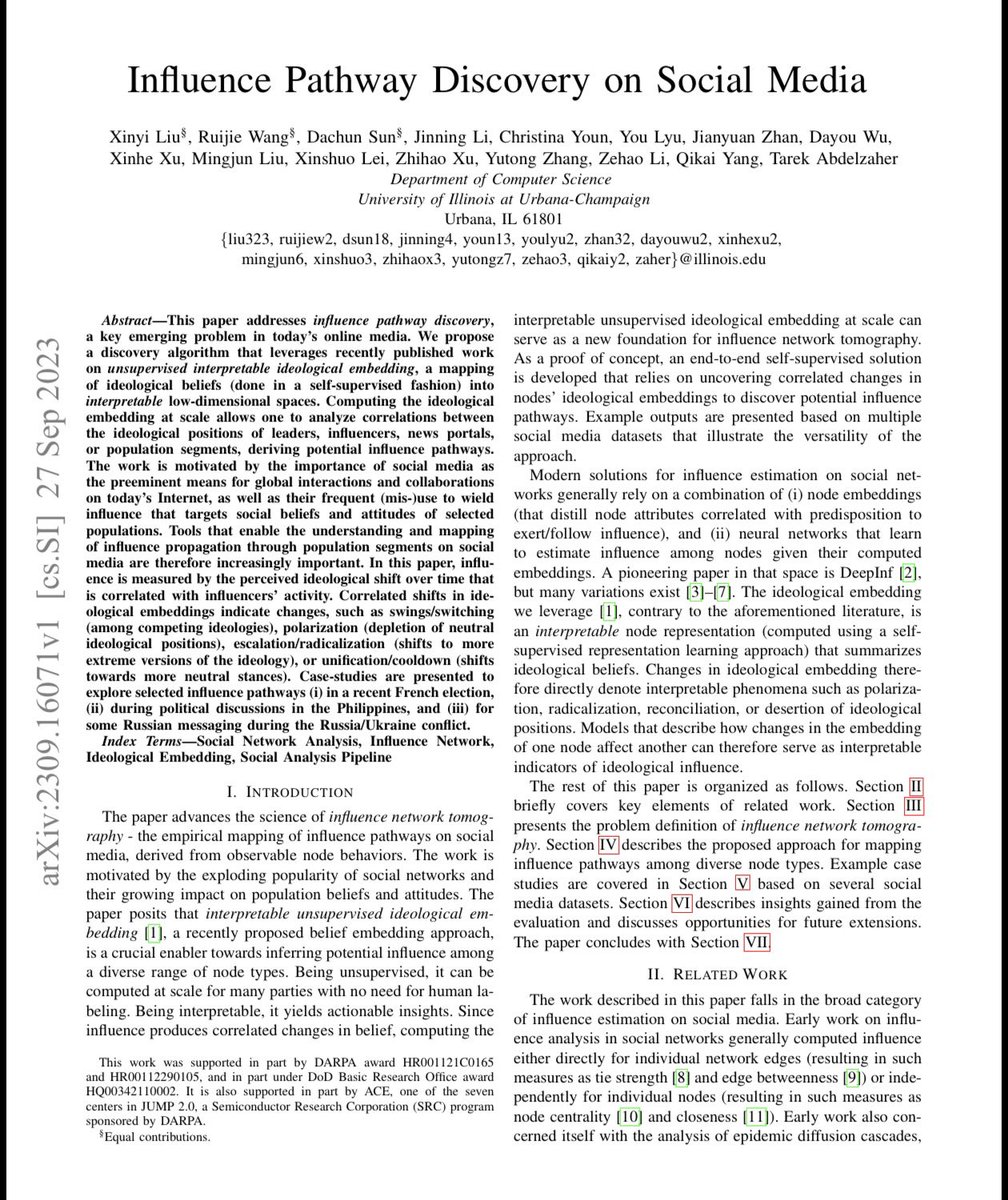

2021–25: Wang worked on the same Pentagon influence-campaign program as Yikun Ban.
2023: Wang coauthored research tracing how online influence can produce ideological shifts, polarization and radicalization.
The research examined elections, political debates and Russian messaging about Ukraine.
2025: Wang joined U.S.-blacklisted Beihang University.
SHUHUA YUE
2010–13: Yue’s official biography lists an individual $113,044 U.S. Defense Department research traineeship.
2014: Yue joined Beihang University.
2023: The U.S. blacklisted Beihang for its connections to China’s military modernization. Yue became a full professor there months later.
2010–13: Yue’s official biography lists an individual $113,044 U.S. Defense Department research traineeship.
2014: Yue joined Beihang University.
2023: The U.S. blacklisted Beihang for its connections to China’s military modernization. Yue became a full professor there months later.
YONGJI GONG
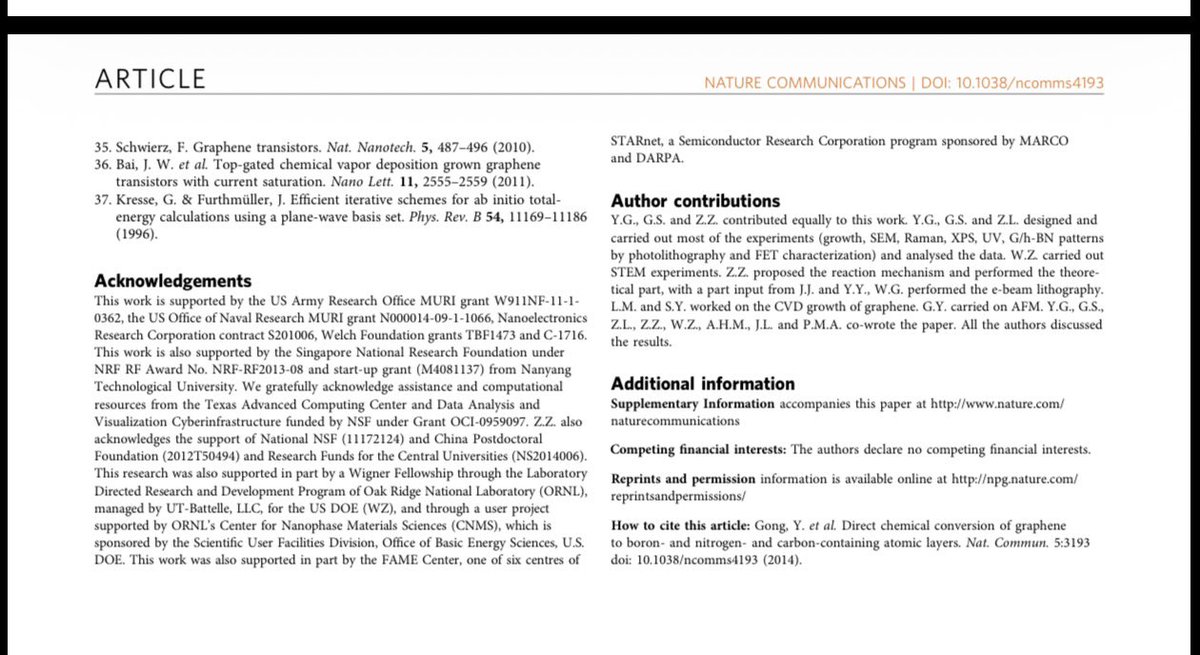
2014: Gong published advanced-materials research supported by major U.S. Army and Navy programs.
He later completed a Rice doctorate and conducted research at Stanford.
Gong then joined Beihang University, which the U.S. blacklisted in 2023.
2014: Gong published advanced-materials research supported by major U.S. Army and Navy programs.
He later completed a Rice doctorate and conducted research at Stanford.
Gong then joined Beihang University, which the U.S. blacklisted in 2023.
YUZHE LIU
2016: Liu’s American research was supported by a U.S. Navy Young Investigator award.
At Stanford, Liu worked on wearable sensors that measure head impacts and brain injuries.
2023: Liu joined Beihang University.
His current biography says the laboratory is developing artificial-intelligence wearables and brain-injury models for “defense scenarios.”
Its goals include building a “high-performance helmet and head protection technology platform.” The profile also lists Chinese science and technology commission-supported projects.

2016: Liu’s American research was supported by a U.S. Navy Young Investigator award.
At Stanford, Liu worked on wearable sensors that measure head impacts and brain injuries.
2023: Liu joined Beihang University.
His current biography says the laboratory is developing artificial-intelligence wearables and brain-injury models for “defense scenarios.”
Its goals include building a “high-performance helmet and head protection technology platform.” The profile also lists Chinese science and technology commission-supported projects.
• • •

Replies
Is our govco so sloppy that no binding contract is signed upon employment, that they can NEVER go work for another country, in any way, shape or form, or they will be arrested immediately for TREASON?
Seriously? HOW is our government so anti-CITIZEN and so pro-enemy?????