TheFrontPageCover
~ Featuring ~
The Road to Crony Capitalism An Introduction

by ROBERT M. WHAPLES

.
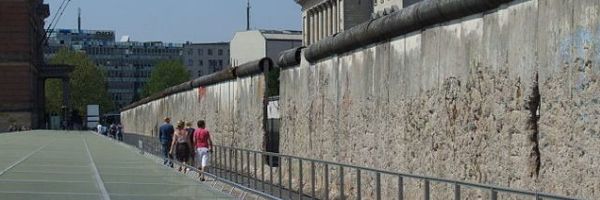
Congressional GOP Is Why America
Doesn’t Have a Wall
 by BRANDON J. WEICHERT
.
Giuliani says dirty cop-Mueller’s investigation
deserves to be investigated as well
 by Ben Marquis
.
The Divine Right of Democrats to Drool
 by DAVID CATRON
.
House Republicans abruptly end
scumbag/liar-Clinton probe as they lose power to Dems
 by Ben Marquis
.
Victimhood Culture and Traditional
Justice Are on a Collision Course

by Wendy McElroy
{thehill.com} ~ “I just want to say to the men in this country, just shut up and step up.” Responding to Brett Kavanaugh’s hearing for his nomination to the Supreme Court... Sen. scumbag-Mazie Hirono (D-Hawaii) put American men on notice: Their day was over. The mainstream press and social media were more specific in echoing who needed to shut up: old white men in government. According to social justice, the proper role for this privileged group is to mutely support victimized ones. Presumably, they could also step aside. Congress has a culture war on its hands and the battles will blaze for the foreseeable future. Congress is a microcosm of the schism that is tearing America apart--ideologically, morally and emotionally. Understanding the dynamics of the conflict requires a grasp of the “victimhood culture” that scumbag-Hirono’s statement epitomized in its message and its tone. The message of this #MeToo approach is “get out of the way of oppressed groups”; the tone is rage. A key to understanding the victimhood ideology is how it defines “justice.” Victimhood is an integral part of identity politics and the social justice movement of past decades. People are separated into categories according to their secondary characteristics, such as gender or race. Their primary characteristic is being human. A person’s political status is then viewed through the lens of his or her group identity, with heavy emphasis placed upon whether the group is considered to be oppressed or oppressive. Men oppress women, for instance. The purpose of social justice is to balance the status of all groups, which requires an imbalance of treatment because some groups are seemingly privileged at the expense of others... https://thehill.com/opinion/civil-rights/415422-victimhood-culture-and-traditional-justice-are-on-a-collision-course.
The Road to Crony Capitalism An Introduction
by ROBERT M. WHAPLES
{independent.org} ~ This issue of The Independent Review is intended to open up a debate about the nature of capitalism. My co-editor, Michael Munger, and his co-author, Mario Villarreal-Diaz, begin the discussion with a deeply disconcerting question: “Suppose it’s true that capitalism has a tendency—it’s not inevitable or irreversible, but a tendency nonetheless—to devolve into crony capitalism. Is laissez-faire simply the first step on a kind of road to serfdom, where giant corporate syndicates achieve a parallel kind of economic planning every bit as pernicious as that feared by Hayek?” They conclude by determining there’s a great deal to worry about: “It is at least possible that cronyism is intrinsic to and not separable from capitalism” (emphasis in the original). And they provide much evidence that it’s not simply a possibility but a reality—firms especially entrenched ones that are losing their innovative edge and politicians have strong incentives to travel down this road.
{independent.org} ~ This issue of The Independent Review is intended to open up a debate about the nature of capitalism. My co-editor, Michael Munger, and his co-author, Mario Villarreal-Diaz, begin the discussion with a deeply disconcerting question: “Suppose it’s true that capitalism has a tendency—it’s not inevitable or irreversible, but a tendency nonetheless—to devolve into crony capitalism. Is laissez-faire simply the first step on a kind of road to serfdom, where giant corporate syndicates achieve a parallel kind of economic planning every bit as pernicious as that feared by Hayek?” They conclude by determining there’s a great deal to worry about: “It is at least possible that cronyism is intrinsic to and not separable from capitalism” (emphasis in the original). And they provide much evidence that it’s not simply a possibility but a reality—firms especially entrenched ones that are losing their innovative edge and politicians have strong incentives to travel down this road.
To initiate the debate, Munger delivered the paper in a plenary session at the April 2018 meeting of the Association of Private Enterprise Education. We continue the debate with six papers that respond to Munger and Villarreal-Diaz’s cronyism argument. In addition, we invite readers to respond to “The Road to Crony Capitalism”—to consider how significant and inevitable the problem of crony capitalism is and to examine whether there are any real solutions to it—with the promise of publishing the best responses online alongside this issue of The Independent Review (send your formal comments to rwhaples@independent.org).
In the first of the six responses, Geoffrey M. Hodgson, playing with another classic economics title, considers in “Capitalism, Cronyism, and Democracy” whether statistical evidence and history can help elucidate the question. Examining Munger and Villarreal-Diaz’s link between democracy and cronyism, that “allowing real democracy may doom real capitalism,” he finds a weak negative correlation between an international index of democracy and international indices of cronyism and corruption. However, his central argument is that “in the beginning there was cronyism.” Cronyism “has had much greater longevity than markets: it extends back to our simian ancestors. Trade . . . has been in existence for tens of thousands of years, but cronyism goes back millions of years. As a consequence, cronyism and corruption are not recent impositions on a market economy.” How can corruption and cronyism be reduced?
Hodgson reports historical evidence that the establishment of a career civil service, a relatively free press, and especially military competition have favored a reduction in the governmental selling of favors. Burton W. Folsom Jr. sees considerable merit in Munger and Villarreal-Diaz’s thesis but argues from U.S. history that the slide toward crony capitalism isn’t so inevitable. He argues in “The Fall and Rise of Laissez-Faire in the United States, 1789–1900” that cronyism is as old as the republic but that there was a distinct backlash against it in the period between the Civil War and 1900. This backlash was spurred by the excesses of cronyism exemplified by the corruption behind handouts in both directions connected with the construction of the Union Pacific and Central Pacific transcontinental railroad. However, this relatively crony-free era didn’t survive the rise of the Progressives at the beginning of the twentieth century. Perhaps there are rest stops on the road to crony capitalism?
Michelle Albert Vachris sees parallels between Munger and Villarreal-Diaz’s arguments and those of Edmund Phelps, who has identified a decline of “dynamism” in American society and business. She reports indications of this decline in statistics on falling business startup and entrepreneurship rates and rising levels of industrial concentration in the United States. However, there has been considerable churn in the firms at the top of the Fortune 500 list in recent decades. In her essay “Dynamism as a Bump on the Road to Crony Capitalism?” she amends Munger and Villarreal-Diaz’s thesis of capitalism’s inherent tendency toward cronyism by proposing that “well directed innovation” can stall the process. Such innovation would probably require a shift in cultural values and especially a greater appreciation of classical liberal ideals in our educational system and society as a whole. Perhaps “dynamism” is not merely a speed bump on the road but a U-turn?
In “Crony Capitalism versus Pure Capitalism,” Walter E. Block fundamentally both agrees and disagrees with Munger and Villarreal-Diaz. He endorses their argument for creeping cronyism in the case of capitalism as we know it in the United States and warns that their “contribution consists of very accurately analyzing the forces that tend to move us in that baleful direction.” However, he notes that “their starting point is not at all the pure free-enterprise system,” which needn’t have this tendency. Rather, he says, they discuss whether a system already suffering from cronyism will stay the same, worsen, or improve. Block sees a ray of light in think tanks such as the Independent Institute that defend and advance free markets and submits that the problem would be cured if the capitalists asking for government favors such as tariffs were to be jailed—likewise the politicians who propose such laws that restrict entry into markets, industries, and professions. Hmm, could the police pull over these scofflaws for speeding down the road to crony capitalism?
In “We Cannot Let Cronyism Overrun Our Economic Garden,” Nick Sorrentino argues that the “road” metaphor should be supplanted. “Cronyism is not a destination. It is, in fact, the landscape”—a garden full of weeds that we need to prune. Tending this garden is a thankless, never-ending task, but it must be accomplished if our economic garden is to flourish. However, he holds out considerable hope because “anticrony sentiment is embedded deep in the DNA of the everyday person,” so it may be possible to limit this weed by shining a spotlight upon it, making it generally unacceptable, politically incorrect, or at least unfashionable—something Sorrentino’s organization AC2News attempts to accomplish.
In “Cronyism: Necessary for the Minimal, Protective State,” Christopher J. Coyne and Abigail R. Hall point out that “to the extent that capitalism requires the existence of a state, even a minimal state, it also requires some degree of cronyism” (emphasis added). Although some envision the ideal government as a simple referee, “real government can never be limited to a role of referee that stands entirely outside of the game it is tasked with overseeing. First, even the minimal protective state requires resources in order to operate. This requirement means that the government must intervene into private economic life to extract resources. . . . Second, the minimal protective state must also have discretion to deal with circumstances that are unforeseen at the time it is granted its initial powers” (emphasis in the original). Accordingly, “even if government were limited to solely providing core protective functions, cronyism would still be rampant” (emphasis in the original). In fact, one “would have a difficult time identifying a sector in the United States that better illuminates the operations of cronyism and its serious defects” than the military sector. Coyne and Hall’s essay thus explores the many ways in which the U.S. military is the quintessence of crony capitalism—the fast lane on the road to crony capitalism.