TheFrontPageCover
~ Featuring ~
Legalizing the Constitution


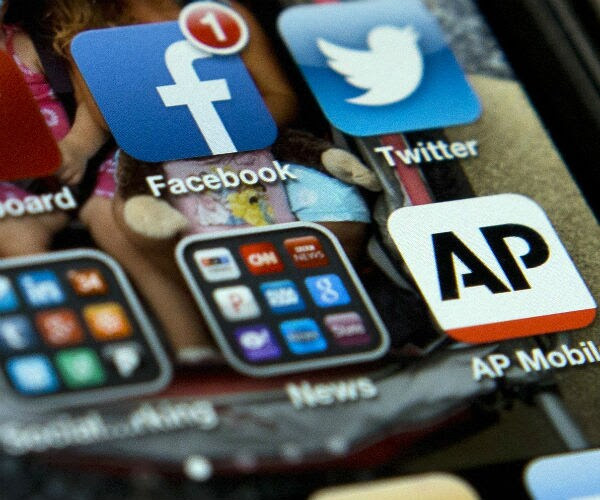
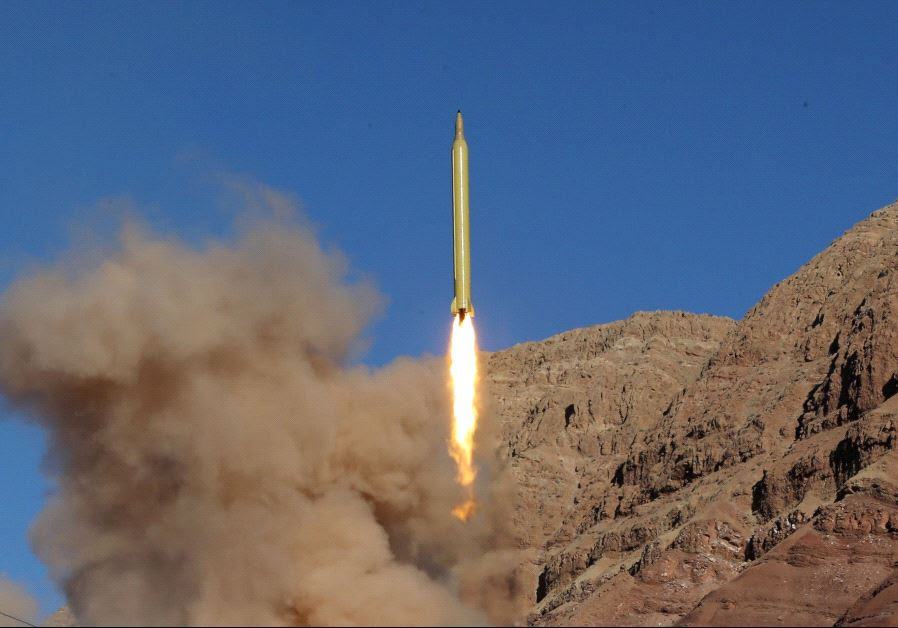
Iran’s Facebook operation
shows that it never restrained its hackers
 by ANNIE FIXLER
.
Radicalized dummycrats-Democrats:
Destroying the Country and Their Own Party
by Jake Hoffman
{ americanthinker.com } ~ From the wee hours of the morning on November 9, 2016, as they grappled with the sting of President-Elect Donald Trump triumphing over the anointed Queen of the Swamp, dummycrats-Democrats have been radicalizing by the minute... Objective Americans have witnessed the transformation of JFK-style classical liberals into Marxist protégés even the namesake himself would be proud to call his pupils, not to mention the hostile takeover of the dummycrats-Democratic Party by the "three home-owning multi-millionaire," commie-Bernie Sanders, and "I'm not an expert on American-Israeli policy, but let me comment on it anyway" commie-Alexandria Ocasio-Cortez. The dummycrats-Democratic Party is soon to be more aptly referenced as the dummycrats-Democratic Socialist Party. And it's not as if the dummycrats-Democrats don't have the resolve to combat such a monumental shift to the left. They've certainly been known to fight when something has truly mattered to them – like the times when they fought tooth and nail to unanimously oppose the 14th and 15th Amendments to the Constitution, giving citizenship to freed slaves and an equal right to vote for all, respectively. Or the time when they overwhelmingly opposed abolishing slavery by fighting to kill the 13th Amendment. If dummycrats-Democrats really opposed the radicalization of their own party, they would fight it, but the quiet truth is that they welcome it....
A secret mission to Iran
{ israelnationalnews.com } ~ Arutz Sheva has discovered that Russian Chief Rabbi Berel Lazar recently visited Iran on a secret diplomatic mission... He was sent by Russian President Vladimir Putin. All official sources have refused to confirm details such as the purpose of the visit and the exact dates. It is possible that Rabbi Lazar's visit to Iran is connected to Israeli Prime Minister Binyamin Netanyahu's attempts to prevent Iran from establishing itself in Syria. Earlier this week, the foreign ministers of both Iran and Syria signed an agreement to tighten military and security cooperation between their countries. https://www.israelnationalnews.com/News/News.aspx/251407
.
dummycrats-Democrats losing
their minds over Trump, Limbaugh says
by wnd.com
{ wnd.com } ~ A dummycrats-Democrat who served in the liar-Bill Clinton administration and now teaches at the University of California at Berkeley has concluded that impeaching President Trump is not a good idea... Not because the evidence of wrongdoing isn’t there. Not because there aren’t enough votes in the House and Senate. Not because of anything like that. It’s because it wouldn’t reverse President Trump’s actions in totality. It wouldn’t erase him from the roster of presidents. It wouldn’t undo the laws he’s signed, the appointments he’s made and the executive orders he’s issued. Talk radio star Rush Limbaugh was flabbergasted. “He’s losing his mind! They all are! It’s hilarious.” The demand for the unprecedented and extra-constitutional “annulment” comes from liar-Clinton Labor Secretary Robert Reich. Now a professor at Berkeley, he wrote in Newsweek: “The only way I see the end of Trump is if there’s overwhelming evidence he rigged the 2016 election. In which case impeachment isn’t an adequate remedy. His presidency should be annulled.”...Monkeying Flack: Media Ignored
scumbag/liar-nObama’s Use Of Anti-Semitic Trigger Words
 by Jeff Dunetz
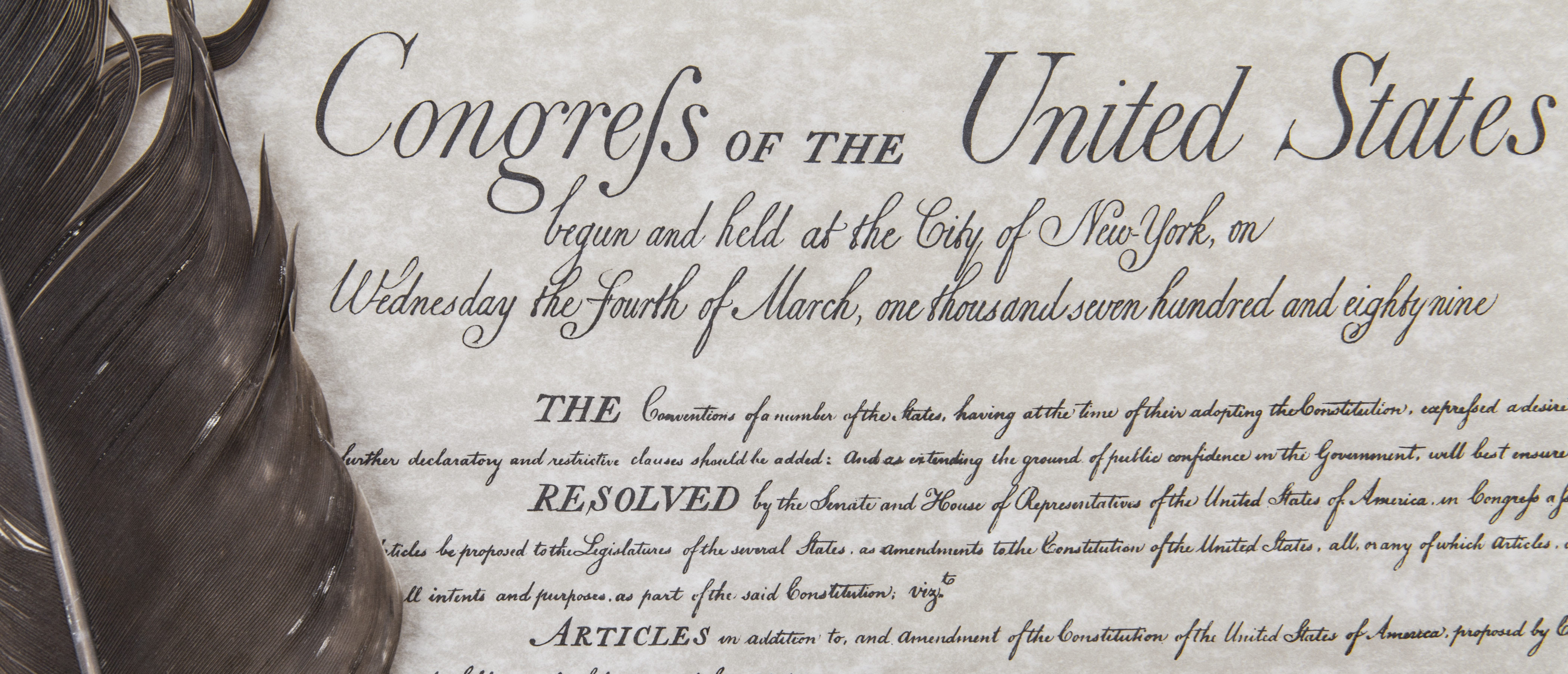
Legalizing the Constitution
{ americanthinker.com } ~ I once had a bumper sticker that read, "Legalize the Constitution." Occasionally, I would find myself having to explain it and often to defend it. Really? Not only is the Bill of Rights no longer understood or venerated, but confusion reigns.
The most important, the First Amendment, seems most prone to misuse. It reads:
The most important, the First Amendment, seems most prone to misuse. It reads:
Congress shall make no law respecting an establishment of religion, or prohibiting the free exercise thereof; or abridging the freedom of speech, or of the press; or the right of the people peaceably to assemble, and to petition the government for a redress of grievances.
Seems simple, yet we find ourselves at a point in our history where its import is ignored, repudiated, or twisted all out of proportion.
The First Amendment starts with the phrase "Congress shall make no law." So this limits the activities of Congress – not of states, or individuals, or schools, or any other group. Just Congress. A community can pass a law against obscene language in public if it wants to. A teacher can limit the amount of speech and its contents in her class – she isn't Congress. A pastor should be able to say anything from the pulpit that his congregation will tolerate.
Secondly, it keeps Congress out of the business of setting up a national religion – common at the time of writing. It keeps Congress – not anyone else – out of regulating religious practice. Nothing in this statute prohibits states, or cities, from doing so. I suspect that if Michigan continues its march toward Islam, at least some of its cities will take advantage of that freedom.
Thirdly, Congress is forbidden to make any law that abridges freedom of speech. This is where we are up against a hard wall. There can be, in this country, no national law enforcing political correctness. This means that federal law enforcement cannot arrest, incarcerate, try, or convict anyone for an utterance just because it is offensive to someone. If I fail to utilize the correct nongendered pronoun, I could be imprisoned in Canada, but the First Amendment prohibits that here.
So does that mean that a company can't fire a person because he was overheard badmouthing the boss? Or propositioning a female employee? Or calling someone the N-word? No. The business belongs to those who own it, and since private ownership of property is another of our cherished rights, the business can hire and fire whom it will. There are social and financial consequences, and the Bill of Rights doesn't protect us from those. If Facebook and Twitter keep offending conservatives, we'll just leave – life without them is possible – but the government has to stay out of it.
Does it mean that the president can't remove the top-secret security clearance from some ex-bureaucrat? No. A security clearance gives a person the right to know, not the right to speak about what he knows. That's why the word "secret" is involved.
Fourthly, "freedom of speech" just means that no federal legal action can be taken against you for something you say. That is not an absolute – threatening to kill or harm someone is illegal. Inciting to riot is as well. Shouting "Fire!" in a crowded theater will land you in some trouble. Lying under oath can cost you. Common sense prevails.
"Freedom of speech" does not protect you from the negative social consequences of being linguistically obnoxious. It does not abrogate laws against slander and libel. It merely means that the federal government can't grab you out of your bed in the middle of the night and throw you in a dungeon for complaining about the powers that be.
I like a Jordan Peterson quote I recently ran across: "Free speech isn't merely the right to criticize those in power, and it's also not only the right to say what you think. It's actually the right to think." I would add that it is also the responsibility to think – before you speak. Every right has a concurrent duty, and the more important the right, the more onerous the obligation. It is horrifying to hear elected officials and other limelight individuals saying in public that our president should be killed. If they don't like Trump's policies, then argue against them, but don't advocate his death.
It is embarrassing to hear our fellow Americans screaming obscenities, which are neither thought nor speech. Taboo words and phrases are linguistically interesting in that they originate not the language center of the brain, but rather in the limbic system – they come boiling up out of the brain stem without a single cogent thought behind them.
What's more, actions are not the same as speech, though courts have disagreed with me. Burning flags, throwing rocks through windows, burning effigies are not discourse – they are temper tantrums. If a person can't articulate his grievances in actual language, then he hasn't thought, hasn't convinced anyone in power of the rightness of his cause, and it's likely he doesn't even know what his cause is.
The First Amendment keeps the government from denying us the right to gather in groups, carry placards, chant slogans, sing songs – yes, but the key word in the amendment is "peaceably." Demonstrations we are seeing in the streets these days are not peaceable. Nor are those assembling speaking in any coherent sense. In fact, lately, many such protests have been attempts to deny others their rights to freely assemble and to speak.
The First Amendment does not protect us from hearing things we find objectionable. We have no right to go through life without being offended. We have no right to be shielded from those with whom we disagree. We have no right to coerce others to agree with us. I am a Christian, and as such, I have an obligation to share the Gospel of Jesus Christ with my fellow man. That is the "practice" of my religion. Yet many today think the expression of my gratitude for my free salvation is an effort to "force" my religion on them. "Force" involves violence, not speech.
Speaking of which, does "freedom of religion" apply to jihadi activity? Is Islam even a religion? One of these days, SCOTUS will have to figure that out. The First Amendment really doesn't protect us from anything but the federal government; however, the federal government does have the responsibility to protect its citizens from "all enemies, foreign and domestic." We'll have to wait and see.
How does the First Amendment affect education? It should not have limited what I as a teacher could say in my public-school classroom – my atheist colleagues could say what they thought, but these days, Christian teachers must be careful. Those who think there is any such thing as neutrality are mistaken. If we limit our children's view of the world by excluding God from the classroom, we have taught them, by default, that God isn't. Schools have hidden behind that sloppy thinking for generations.
We cannot protect the Constitution if we don't take the time to think it through, if we don't even know what it says. It is not a bludgeon with which to accost or silence our opponents. It is not an invitation to lie or manipulate. It is meant to defend honorable citizens from a government's tendency to become dishonorable. Our Constitution – the most astounding covenant outside of the Bible – deserves not only "legalization," but reverence, care, and protection.







 by Fox Business in Economy