The Front Page Cover
"I pray that the eyes of your heart may be enlightened"
Featuring:
The diplomatic track to war
Caroline B. Glick
"Rise up together as one voice"
"Be careful where you stand"
~~~lll~~~
Hilly: Oh, That Email? I Deleted It All
Thanks to Hilly Clinton and the nObama administration, it's apparent how insufficient are the laws designed to bring transparency and oversight into government affairs. Over the weekend, longtime Clinton lawyer David E. Kendall sent a letter to the House Select Committee on Benghazi, responding to its March 4 subpoena. In it, he admitted the Clinton machine deleted all the email from Hilly Clinton's now infamous email server. All the scrambled notes, all the dispatches and updates that marked Clinton's time as the nation's chief diplomat are gone. In response, Rep. Trey Gowdy (R-SC) summoned the former secretary of state before the committee to privately answer for her actions. In his letter to Clinton's lawyer, Gowdy wrote, "The Committee believes a transcribed interview would best protect Secretary Clinton’s privacy, the security of the information queried, and the public’s interest in ensuring this Committee has all information needed to accomplish the task set before it. ... We continue to believe Secretary Clinton’s email arrangement with herself is highly unusual, if not unprecedented." Hilly better beware the Ides of March. It wasn't an email server that took down a Caesar, but by hiding information from the public she's signaling she wants to be treated as a king. And what a scheme she had. -The Patriot Post
CENTRIST STRATEGY FIRST CASUALTY OF HILLY EMAIL SCANDAL
Hilly Clinton’s email scandal means nothing to voters! It is settled conventional wisdom! The campaign has declared that it means nothing to voters! The surveys were in, and revealed that Americans didn’t care about the story but rather, according to her campaign, that “People very much want to know what the campaign is going to be about ... what is she going to do about student loan costs, for example?” Yeah. About that…
The polls were taken too soon and done before voters had marinated in the fact that one of its major party’s presumptive nominees had destroyed evidence that she says would exonerate her. (Weird, right?) But now we get a picture of how defining of a struggle this will be for Clinton.
She has until May 1 to decide whether or not to answer questions from Congress about why she built a secret email system before taking the job as secretary of state, maintained it in contravention of all the obvious rules and then destroyed more than 30,000 emails and wiped the server after both the legislative and executive branches of government asked her to turn over what she had kept hidden.
And it’s not just Congress, but also that than an inspector general will be rooting around to explain why Clinton explicitly broke the rules and raise new questions about how Clinton and her team were able to conceal from those charged with policing such practices an evasion so widely known among upper echelons of the government, all the way to the president himself.
The new Quinnipiac poll shows that not only is the scandal having its effect on Clinton’s chances to return to the White House, but that it has damaged her core brand with voters: “Clinton is not honest and trustworthy, Florida voters say 50 - 41 percent and Pennsylvania voters say 49 - 44 percent. Ohio voters are divided as 47 percent say yes and 46 percent say no.”
This is a big step down from last month, mirrored in a substantial downgrade in her personal favorability ratings. Part of this is because she has reemerged from her cocoon as elder stateswoman bestride the globe and reminded Americans that she is one of the most divisive, polarizing and partisan figures of her generation. This is all part of falling to earth. But the emails provide the most pungent reminder imaginable of those traits.
Clinton’s campaign bets that this can all eventually be turned into a positive as the first female major-party nominee is subject to what will be a years-long effort by unpopular congressional Republicans to dig through her documents. That’s not a bad bet. But the process of getting there will have a dire effect on Clinton’s planned strategy for returning to the White House.
An inhabitant of a “warm purple space” seeking the presidency in the name of rolling back partisanship, in the name of “inclusive prosperity” does not engage in partisan siege warfare over document secrecy. The second act of Clinton’s presidential campaign – the first being a blighted book launch – shows a candidate who will be very much bound by her past and by the vicious partisan warfare in which the current Democratic president has been engaged. -Fox News
Hilly Clinton’s email scandal means nothing to voters! It is settled conventional wisdom! The campaign has declared that it means nothing to voters! The surveys were in, and revealed that Americans didn’t care about the story but rather, according to her campaign, that “People very much want to know what the campaign is going to be about ... what is she going to do about student loan costs, for example?” Yeah. About that…
The polls were taken too soon and done before voters had marinated in the fact that one of its major party’s presumptive nominees had destroyed evidence that she says would exonerate her. (Weird, right?) But now we get a picture of how defining of a struggle this will be for Clinton.
She has until May 1 to decide whether or not to answer questions from Congress about why she built a secret email system before taking the job as secretary of state, maintained it in contravention of all the obvious rules and then destroyed more than 30,000 emails and wiped the server after both the legislative and executive branches of government asked her to turn over what she had kept hidden.
And it’s not just Congress, but also that than an inspector general will be rooting around to explain why Clinton explicitly broke the rules and raise new questions about how Clinton and her team were able to conceal from those charged with policing such practices an evasion so widely known among upper echelons of the government, all the way to the president himself.
The new Quinnipiac poll shows that not only is the scandal having its effect on Clinton’s chances to return to the White House, but that it has damaged her core brand with voters: “Clinton is not honest and trustworthy, Florida voters say 50 - 41 percent and Pennsylvania voters say 49 - 44 percent. Ohio voters are divided as 47 percent say yes and 46 percent say no.”
This is a big step down from last month, mirrored in a substantial downgrade in her personal favorability ratings. Part of this is because she has reemerged from her cocoon as elder stateswoman bestride the globe and reminded Americans that she is one of the most divisive, polarizing and partisan figures of her generation. This is all part of falling to earth. But the emails provide the most pungent reminder imaginable of those traits.
Clinton’s campaign bets that this can all eventually be turned into a positive as the first female major-party nominee is subject to what will be a years-long effort by unpopular congressional Republicans to dig through her documents. That’s not a bad bet. But the process of getting there will have a dire effect on Clinton’s planned strategy for returning to the White House.
An inhabitant of a “warm purple space” seeking the presidency in the name of rolling back partisanship, in the name of “inclusive prosperity” does not engage in partisan siege warfare over document secrecy. The second act of Clinton’s presidential campaign – the first being a blighted book launch – shows a candidate who will be very much bound by her past and by the vicious partisan warfare in which the current Democratic president has been engaged. -Fox News
nOBAMA VETOES GOP BILL TO STOP UNION ELECTION RULES
WashEx: “President nObama on Tuesday vetoed legislation that would undo new rules governing union elections that businesses oppose, saying they would give an advantage to unions during organizing drives. It was the second veto nObama has issued since Republicans took control of the Senate in January and the fourth of his tenure. The bill, passed by on mostly party-line votes by the House and Senate earlier in March, would prohibit the National Labor Relations Board from implementing a rule, issued in December that would accelerate union elections at workplaces. In vetoing the bill, nObama called the rule a ‘modest but overdue’ change to labor elections laws…House Speaker backstabber John Boehner objected to the veto.” -Fox News
WashEx: “President nObama on Tuesday vetoed legislation that would undo new rules governing union elections that businesses oppose, saying they would give an advantage to unions during organizing drives. It was the second veto nObama has issued since Republicans took control of the Senate in January and the fourth of his tenure. The bill, passed by on mostly party-line votes by the House and Senate earlier in March, would prohibit the National Labor Relations Board from implementing a rule, issued in December that would accelerate union elections at workplaces. In vetoing the bill, nObama called the rule a ‘modest but overdue’ change to labor elections laws…House Speaker backstabber John Boehner objected to the veto.” -Fox News
That escalated quickly: Schumer, Durbin spatting already - WaPo: “So much for a neat, orderly succession. Sen. Charles E. Schumer (D-N.Y.) and Richard J. Durbin (D-Ill.) were at odds Tuesday over the future of the Democratic whip position, just days after Minority Leader dinky Harry M. Reid (D-Nev.) triggered a leadership shuffle with his retirement announcement. Durbin's office said Schumer vowed to support Durbin staying on as whip, the No. 2 position in leadership. Schumer's office said he made no such assurance…According to Durbin's office, Durbin and Schumer came to an agreement during that chat in anticipation of dinky Reid's announcement. ‘The two senators agreed to support each other, Schumer for leader, Durbin for whip,’ said Durbin spokesman Ben Marter. ‘They shook hands. That was the interaction.’ But Schumer spokesman Matt House denied that his boss agreed to back Durbin for whip. ‘That never happened, and they know it,’ House said.” -Fox News

1.

nObama’s Iran deal falls far short of his own goals
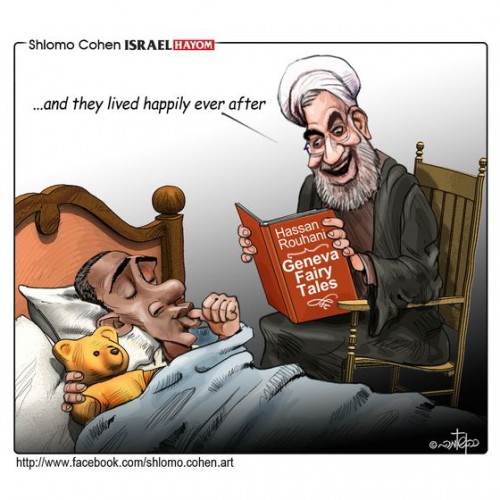
(washingtonpost.com) - THE “KEY parameters” for an agreement on Iran’s nuclear program released Thursday fall well short of the goals originally set by the nObama administration. None of Iran’s nuclear facilities — including the Fordow center buried under a mountain — will be closed...Not one of the country’s 19,000 centrifuges will be dismantled. Tehran’s existing stockpile of enriched uranium will be “reduced” but not necessarily shipped out of the country. In effect, Iran’s nuclear infrastructure will remain intact, though some of it will be mothballed for 10 years. When the accord lapses, the Islamic republic will instantly become a threshold nuclear state. That’s a long way from the standard set by President nObama in 2012 when he declared that “the deal we’ll accept” with Iran “is that they end their nuclear program” and “abide by the U.N. resolutions that have been in place.” Those resolutions call for Iran to suspend the enrichment of uranium. Instead, under the agreement announced Thursday, enrichment will continue with 5,000 centrifuges for a decade, and all restraints on it will end in 15 years. http://www.washingtonpost.com/opinions/obamas-iran-deal-falls-well-short-of-his-own-goals/2015/04/02/7974413c-d95c-11e4-b3f2-607bd612aeac_story.html?postshare=4151428013724869
2.
Texas: Muslim charged with aiding Afghan jihad groups
(Robert Spencer) - In what way is Muhanad Mahmoud al Farekh a “Texas man”? He was born there. Yet it is unlikely that he has anything but contempt for many, if not most, of his fellow Texans — those who would not wish to see Texas become an Islamic state...It is unlikely that Muhanad Mahmoud al Farekh has any regard for Texas’ history and heritage — that is all jahiliyya, the worthless trash that one finds in the society of unbelievers. A Texas-born man was charged Thursday with conspiring to aid militant groups fighting U.S. forces in Afghanistan, becoming the latest American to be prosecuted in federal court on suspicion of assisting terrorist cells overseas. Muhanad Mahmoud al Farekh faces 15 years in prison if convicted of conspiracy to provide material support to terrorists. He appeared in federal court in Brooklyn on Thursday afternoon following his deportation from Pakistan and was being held without bail. Farekh, who was not asked to enter a plea, is next due in court in May. The announcement of the charges against Farekh came on the same day that federal prosecutors in New York announced the indictment of two Queens, N.Y., women on charges of plotting to build a bomb for use against U.S. targets. http://www.jihadwatch.org/2015/04/texas-muslim-charged-with-aiding-afghan-jihad-groups?utm_source=Jihad+Watch+Daily+Digest&utm_campaign=546ce30f68-Daily_Digest&utm_medium=email&utm_term=0_ffcbf57bbb-546ce30f68-123451509
3.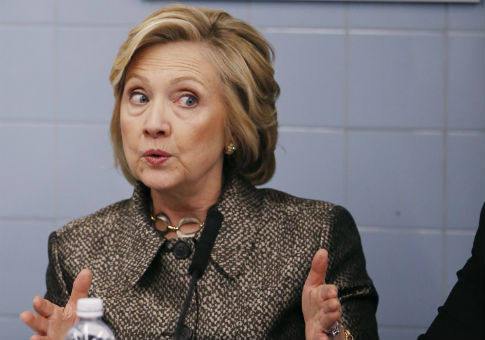
Clinton Skirting FEC Regulations
(Alana Goodman) - A conservative watchdog group is asking the Federal Election Commission to investigate whether Hilly Clinton broke the law by conducting campaign activities before declaring her candidacy, according to a complaint filed on Thursday...The Foundation for Accountability and Civic Trust (FACT) said Clinton and the group Ready for Hilly may have violated federal campaign regulations by failing to disclose contributions while Clinton was acting as a candidate. While there are rules against running a campaign without officially declaring a candidacy, most prospective candidates conduct preliminary work during a legal “testing the waters” period. However, FACT argues that Clinton’s campaign activities have been much more extensive than this exploratory window allows. http://freebeacon.com/politics/watchdog-clinton-skirting-fec-regulations/
4.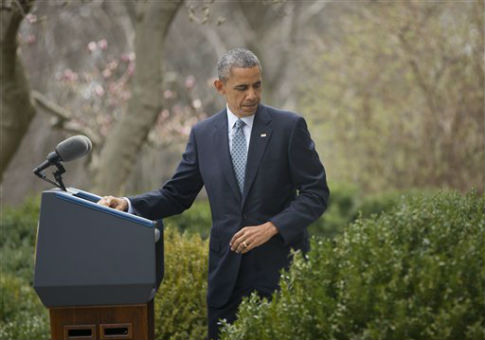
Benghazi, Bergdahl, and the Bomb
(Matthew Continetti) - President nObama strode to the lectern in the Rose Garden Thursday to announce a “historic” agreement between the United States and the Islamic Republic of Iran...The preliminary deal made in Lausanne, Switzerland, the president said, “cuts off every pathway Iran could take to develop a nuclear weapon.” I hope he’s right. But I’m not counting on it. The president has a terrible record of initial public pronouncements on national security. He has a habit of confidently stating things that turn out not to be true. Three times in the last four years he has appeared in the Rose Garden and made assertions that were later proven to be false. He and his national security team have again and again described a world that does not correspond to reality. No reason to assume these concessions to Iran will be any different. He is one big fat liar. Why is he getting away with it America? http://freebeacon.com/columns/benghazi-bergdahl-and-the-bomb/
5.
Busted: Hilly Excuses on Secret Email 'Crumble at Her Feet'
(Guy Benson) - Katie mentioned this development earlier in the week, but it deserves to be highlighted again. Hilly Clinton has been ducking the press for months -- even addressing a journalism convention without taking questions, to a standing ovation, of course...but she did briefly emerge in early March to field a handful of inquiries on the burgeoning scandal over her secret, national security-compromising email system. The biggest take-away from her performance was that she ostensibly commissioned the creation of a private 'homebrew' email server for the purposes of "convenience." She wanted to have all of her communications on a single mobile device, she claimed, so she eschewed her official government email account in favor of her own personal system. This "convenient" decision required the decidedly inconvenient task of setting up her own server, and violated "clear cut" State Department transparency rules. And now it turns out that her entire "one device convenience" justification was, as expected, complete garbage: http://townhall.com/tipsheet/guybenson/2015/04/02/hillarys-secret-email-defense-has-crumbled-at-her-feet-n1979651
6.
IRAN ACCUSES U.S. -
ONE BIG FAT LIAR
Iran Accuses U.S. of Lying About New Nuke Agreement
(Adam Kredo) - Just hours after the announcement of what the United States characterized as a historic agreement with Iran over its nuclear program, the country’s leading negotiator lashed out at the nObama administration for lying about the details of a tentative framework...Iranian Foreign Minister Javad Zarif accused the nObama administration of misleading the American people and Congress in a fact sheet it released following the culmination of negotiations with the Islamic Republic. Zarif bragged in an earlier press conference with reporters that the United States had tentatively agreed to let it continue the enrichment of uranium, the key component in a nuclear bomb, as well as key nuclear research. Zarif additionally said Iran would have all nuclear-related sanctions lifted once a final deal is signed and that the country would not be forced to shut down any of its currently operating nuclear installations. http://freebeacon.com/national-security/iran-accuses-u-s-of-lying-about-new-nuke-agreement/
7.
Hilly Clinton CLEARLY LIED and these Emails Prove It!
(Tim Brown) - So, one of the most corrupt women from one of the most corrupt families in the united States wants to be president, but she doesn't have a clue about national security as evidenced in Benghazi and her criminal actions in which she violated federal law by setting up an illegal email server...I think she might be better suited for a rock quarry at this point than the Oval Office, but it's her lies about it all that are right in the faces of the people of America without any justice being rendered on this 60's radical hag. Now, if you recall, Onan Coca exposed that fact that Hilly had blatantly lied about her reasons for her lawlessness regarding her email server. According to Clinton, she told reporters, "I thought it would be easier to carry just one device for my work and for my personal e-mails, instead of two." Of course, as Coca pointed out with video evidence, Mrs. Clinton carries two devices anyway. But there's more… http://eaglerising.com/16854/hillary-clinton-clearly-lied-and-these-emails-prove-it/
8.
“The Swiss Cheese Agreement.”
(Rick Moran) - The vagueness of the framework deal struck between the P5+1 powers and Iran is going to work out beautifully for Tehran in that there is apparently enough wiggle room for them to engage in nuclear activities that the U.S. is clearly saying they can’t engage in...Looking at how each side is interpreting the same elements of the deal is an eye opener. The Iranian outlook is from their semi-official press organ, Press TV. The U.S. interpretation is quoted from Politico. We ought to call this deal “The Swiss Cheese Agreement.” It’s obvious that Iran is going to interpret the deal any way it wants and that the administration’s spin is geared to putting a prom dress on a pig, selling it to the press, to Democrats, and to the American people as a “good deal.” From where I’m sitting, far from putting Iran in a box, is allows them to continue dual-purpose research and does nothing to shorten the time it would take them to kick out the inspectors and quickly gear up to build a bomb. http://pjmedia.com/tatler/2015/04/02/how-is-iran-interpreting-the-nuclear-deal-compared-to-the-us/
9.
Who Are the Principal Violators of International Law?
(Lawrence A. Franklin) - There is an unspoken racist assumption that underlies the drive for a separate Palestinian Arab state: that no Jews should be allowed to live there...Presumably, this is why any land now resided on by Jews in the West Bank is called a "settlement." The assumption is apparently that the entire area is an illegal colony. What is less well known is that even though Jews have continuously lived in this region -- it is called Judea -- for nearly 4,000 years, to many Muslims, the entire State of Israel, not just the West Bank, is considered an "illegal settlement." Please look at any map of "Palestine." It is exactly this view that is the real source of the dispute. The real dispute is not about a "Palestinian State." It is about who has the right to the entire area. This is also the reason the Palestinian negotiators will never sign an "end of conflict" agreement. As we have seen with Syria and Iraq, "official borders," even and including the "pre-1967 line," do not matter any more. Further, the Palestinian Authority (PA) -- Mahmoud Abbas's Fatah as well as Hamas -- continues to educate the next generation of Arab Palestinians that Israel is destined to disappear. The PA continues to depict a world without Israel and a future without Israel -- a vision first embodied in the Palestinian Liberation Organization's (PLO) 1974 Ten Point Program, known as the "Phased Plan." Its stated goal -- never rescinded -- is the "liberation of all of Palestine." This is to be done in stages, a "salami" tactic, by which any land acquired is to be used as a forward base from which to take the rest. http://www.gatestoneinstitute.org/5480/international-law-violators
10.
DHS Launches New Program Offering Free Transportation for Children
(nicedeb.wordpress.com) - As the media hypes bright shiny objects like SSM, and nObama’s “peace in our time” Iran nuke deal, the Regime’s radical immigration policies continue apace...Our fundamental transformation requires a steady flow of third world immigrants into the nation – and to facilitate the process of entering the United States, illegally, the nObama administration is offering them FREE TRANSPORTATION “and a special refugee/parole program with “resettlement assistance” and permanent residency.” During a teleconference this week with officials from U.S. Citizenship and Immigration Services and the State Department, an official said that applicants would not be required to express or document a credible fear to qualify under CAM because “we want to make sure this program is open to as many people as possible.” https://nicedeb.wordpress.com/2015/04/03/dhs-launches-new-program-offering-free-transportation-for-children-of-central-american-immigrants-to-the-us/
The diplomatic track to war
Caroline B. Glick
(jewishworldreview.com) - The world powers assembled at Lausanne, Switzerland, with the representatives of the Islamic Republic may or may not reach a framework deal regarding Iran’s nuclear program. But succeed or fail, the disaster that their negotiations have unleashed is already unfolding. The damage they have caused is irreversible.
US President Barack nObama, his advisers and media cheerleaders have long presented his nuclear diplomacy with the Iran as the only way to avoid war. nObama and his supporters have castigated as warmongers those who oppose his policy of nuclear appeasement with the world’s most prolific state sponsor of terrorism.
But the opposite is the case. Had their view carried the day, war could have been averted.
Through their nuclear diplomacy, nObama and his comrades started the countdown to war.
In recent weeks we have watched the collapse of the allied powers’ negotiating positions.
They have conceded every position that might have placed a significant obstacle in Iran’s path to developing a nuclear arsenal.
They accepted Iran’s refusal to come clean on the military dimensions of its past nuclear work and so ensured that to the extent UN nuclear inspectors are able to access Iran’s nuclear installations, those inspections will not provide anything approaching a full picture of its nuclear status. By the same token, they bowed before Iran’s demand that inspectors be barred from all installations Iran defines as “military” and so enabled the ayatollahs to prevent the world from knowing anything worth knowing about its nuclear activities.
On the basis of Iran’s agreement to ship its stockpile of enriched uranium to Russia, the US accepted Iran’s demand that it be allowed to maintain and operate more than 6,000 centrifuges.
But when on Monday Iran went back on its word and refused to ship its uranium to Russia, the US didn’t respond by saying Iran couldn’t keep spinning 6,000 centrifuges. The US made excuses for Iran.
The US delegation willingly acceded to Iran’s demand that it be allowed to continue operating its fortified, underground enrichment facility at Fordow. In so doing, the US minimized the effectiveness of a future limited air campaign aimed at significantly reducing Iran’s nuclear capabilities.
With this broad range of great power concessions already in its pocket, the question of whether or not a deal is reached has become a secondary concern. The US and its negotiating partners have agreed to a set of understanding with the Iranians. Whether these understandings become a formal agreement or not is irrelevant because the understandings are already being implemented.
True, the US has not yet agreed to Iran’s demand for an immediate revocation of the economic sanctions now standing against it. But the notion that sanctions alone can pressure Iran into making nuclear concessions has been destroyed by nObama’s nuclear diplomacy in which the major concessions have all been made by the US.
No sanctions legislation that Congress may pass in the coming months will be able to force a change in Iran’s behavior if they are not accompanied by other coercive measures undertaken by the executive branch.
US President Barack nObama, his advisers and media cheerleaders have long presented his nuclear diplomacy with the Iran as the only way to avoid war. nObama and his supporters have castigated as warmongers those who oppose his policy of nuclear appeasement with the world’s most prolific state sponsor of terrorism.
But the opposite is the case. Had their view carried the day, war could have been averted.
Through their nuclear diplomacy, nObama and his comrades started the countdown to war.
In recent weeks we have watched the collapse of the allied powers’ negotiating positions.
They have conceded every position that might have placed a significant obstacle in Iran’s path to developing a nuclear arsenal.
They accepted Iran’s refusal to come clean on the military dimensions of its past nuclear work and so ensured that to the extent UN nuclear inspectors are able to access Iran’s nuclear installations, those inspections will not provide anything approaching a full picture of its nuclear status. By the same token, they bowed before Iran’s demand that inspectors be barred from all installations Iran defines as “military” and so enabled the ayatollahs to prevent the world from knowing anything worth knowing about its nuclear activities.
On the basis of Iran’s agreement to ship its stockpile of enriched uranium to Russia, the US accepted Iran’s demand that it be allowed to maintain and operate more than 6,000 centrifuges.
But when on Monday Iran went back on its word and refused to ship its uranium to Russia, the US didn’t respond by saying Iran couldn’t keep spinning 6,000 centrifuges. The US made excuses for Iran.
The US delegation willingly acceded to Iran’s demand that it be allowed to continue operating its fortified, underground enrichment facility at Fordow. In so doing, the US minimized the effectiveness of a future limited air campaign aimed at significantly reducing Iran’s nuclear capabilities.
With this broad range of great power concessions already in its pocket, the question of whether or not a deal is reached has become a secondary concern. The US and its negotiating partners have agreed to a set of understanding with the Iranians. Whether these understandings become a formal agreement or not is irrelevant because the understandings are already being implemented.
True, the US has not yet agreed to Iran’s demand for an immediate revocation of the economic sanctions now standing against it. But the notion that sanctions alone can pressure Iran into making nuclear concessions has been destroyed by nObama’s nuclear diplomacy in which the major concessions have all been made by the US.
No sanctions legislation that Congress may pass in the coming months will be able to force a change in Iran’s behavior if they are not accompanied by other coercive measures undertaken by the executive branch.
There is nothing new in this reality. For a regime with no qualms about repressing its society, economic sanctions are not an insurmountable challenge. But it is possible that if sanctions were implemented as part of a comprehensive plan to use limited coercive means to block Iran’s nuclear advance, they could have effectively blocked Iran’s progress to nuclear capabilities while preventing war. Such a comprehensive strategy could have included a proxy campaign to destabilize the regime by supporting regime opponents in their quest to overthrow the mullahs. It could have involved air strikes or sabotage of nuclear installations and strategic regime facilities like Revolutionary Guards command and control bases and ballistic missile storage facilities. It could have involved diplomatic isolation of Iran.
Moreover, if sanctions were combined with a stringent policy of blocking Iran’s regional expansion by supporting Iraqi sovereignty, supporting the now deposed government of Yemen and making a concerted effort to weaken Hezbollah and overthrow the Iranian-backed regime in Syria, then the US would have developed a strong deterrent position that would likely have convinced Iran that its interest was best served by curbing its imperialist enthusiasm and setting aside its nuclear ambitions.
In other words, a combination of these steps could have prevented war and prevented a nuclear Iran. But today, the US-led capitulation to Iran has pulled the rug out from any such comprehensive strategy. The administration has no credibility. No one trusts nObama to follow through on his declared commitment to prevent Iran from becoming a nuclear power.
No one trusts Washington when nObama claims that he is committed to the security of Israel and the US’s Sunni allies in the region.
And so we are now facing the unfolding disaster that nObama has wrought. The disaster is that deal or no deal, the US has just given the Iranians a green light to behave as if they have already built their nuclear umbrella. And they are in fact behaving in this manner.
They may not have a functional arsenal, but they act as though they do, and rightly so, because the US and its partners have just removed all significant obstacles from their path to nuclear capabilities. The Iranians know it. Their proxies know it. Their enemies know it.
As a consequence, all the regional implications of a nuclear armed Iran are already being played out. The surrounding Arab states led by Saudi Arabia are pursuing nuclear weapons. The path to a Middle East where every major and some minor actors have nuclear arsenals is before us.
Iran is working to expand its regional presence as if it were a nuclear state already. It is brazenly using its Yemeni Houthi proxy to gain maritime control over the Bab al-Mandab, which together with Iran’s control over the Straits of Hormuz completes its maritime control over shipping throughout the Middle East.
Israel, Jordan, Egypt, Saudi Arabia, Sudan and Eritrea, and their global trading partners will be faced with the fact that their primary maritime shipping route to Asia is controlled by Iran.
With its regional aggression now enjoying the indirect support of its nuclear negotiating partners led by the US, Iran has little to fear from the pan-Arab attempt to dislodge the Houthis from Aden and the Bab al-Mandab. If the Arabs succeed, Iran can regroup and launch a new offensive knowing it will face no repercussions for its aggression and imperialist endeavors.
Then of course there are Iran’s terror proxies.
Hezbollah, whose forces now operate openly in Syria and Lebanon, is reportedly active as well in Iraq and Yemen. These forces behave with a brazenness the likes of which we have never seen.
Hamas too believes that its nuclear-capable Iranian state sponsor ensures that regardless of its combat losses, it will be able to maintain its regime in Gaza and continue using its territory as a launching ground for assaults against Israel and Egypt.
Iran’s Shiite militias in Iraq have reportedly carried out heinous massacres of Sunnis who have fallen under their control and faced no international condemnation for their war crimes, operating as they are under Iran’s protection and sponsorship. And the Houthis, of course, just overthrew a Western-backed government that actively assisted the US and its allies in their campaign against al-Qaida.
For their proxies’ aggression, Iran has been rewarded with effective Western acceptance of its steps toward regional domination and nuclear armament.
Hezbollah’s activities represent an acute and strategic danger to Israel. Not only does Hezbollah now possess precision guided missiles that are capable of taking out strategic installations throughout the country, its arsenal of 100,000 missiles can cause a civilian disaster.
Hezbollah forces have been fighting in varied combat situations continuously for the past three years. Their combat capabilities are incomparably greater than those they fielded in the 2006 Second Lebanon War. There is every reason to believe that these Hezbollah fighters, now perched along Israel’s borders with Lebanon and Syria, can make good their threat to attack and hold fixed targets including border communities.
While Israel faces threats unlike any we have faced in recent decades that all emanate from Western-backed Iranian aggression and expansionism carried out under a Western-sanctioned Iranian nuclear umbrella, Israel is not alone in this reality. The unrolling disaster also threatens the moderate Sunni states including Jordan, Egypt, Saudi Arabia, Kuwait and the United Arab Emirates. The now regional war in Yemen is but the first act of the regional war at our doorstep.
There are many reasons this war is now inevitable.
Every state threatened by Iran has been watching the Western collapse in Switzerland.
They have been watching the Iranian advance on the ground. And today all of them are wondering the same thing: When and what should we strike to minimize the threats we are facing.
Everyone recognizes that the situation is only going to get worse. With each passing week, Iran’s power and brazenness will only increase.
Everyone understands this. And this week they learned that with Washington heading the committee welcoming Iran’s regional hegemony and nuclear capabilities, no outside power will stand up to Iran’s rise. The future of every state in the region hangs in the balance. And so, it can be expected that everyone is now working out a means to preempt and prevent a greater disaster.
These preemptive actions will no doubt include three categories of operations: striking Hezbollah’s missile arsenal; striking the Iranian Navy to limit its ability to project its force in the Bab al-Mandab; and conducting limited military operations to destroy a significant portion of Iran’s nuclear installations.
Friday is the eve of Passover. Thirteen years ago, Palestinian terrorists brought home the message of the Exodus when they blew up the Seder at Netanya’s Park Hotel, killing 30, wounding 140, and forcing Israel into war. The message of the Passover Haggada is that there are no shortcuts to freedom. To gain and keep it, you have to be willing to fight for it.
That war was caused by Israel’s embrace of the notion that you can bring peace through concessions that empower an enemy sworn to your destruction. The price of that delusion was thousands of lives lost and families destroyed.
Iran is far more powerful than the PLO. But the Americans apparently believe they are immune from the consequences of their leaders’ policies. This is not the case for Israel or for our neighbors. We lack the luxury of ignoring the fact that nObama’s disastrous diplomacy has brought war upon us. Deal or no deal, we are again about to be forced to pay a price to maintain our freedom.
Moreover, if sanctions were combined with a stringent policy of blocking Iran’s regional expansion by supporting Iraqi sovereignty, supporting the now deposed government of Yemen and making a concerted effort to weaken Hezbollah and overthrow the Iranian-backed regime in Syria, then the US would have developed a strong deterrent position that would likely have convinced Iran that its interest was best served by curbing its imperialist enthusiasm and setting aside its nuclear ambitions.
In other words, a combination of these steps could have prevented war and prevented a nuclear Iran. But today, the US-led capitulation to Iran has pulled the rug out from any such comprehensive strategy. The administration has no credibility. No one trusts nObama to follow through on his declared commitment to prevent Iran from becoming a nuclear power.
No one trusts Washington when nObama claims that he is committed to the security of Israel and the US’s Sunni allies in the region.
And so we are now facing the unfolding disaster that nObama has wrought. The disaster is that deal or no deal, the US has just given the Iranians a green light to behave as if they have already built their nuclear umbrella. And they are in fact behaving in this manner.
They may not have a functional arsenal, but they act as though they do, and rightly so, because the US and its partners have just removed all significant obstacles from their path to nuclear capabilities. The Iranians know it. Their proxies know it. Their enemies know it.
As a consequence, all the regional implications of a nuclear armed Iran are already being played out. The surrounding Arab states led by Saudi Arabia are pursuing nuclear weapons. The path to a Middle East where every major and some minor actors have nuclear arsenals is before us.
Iran is working to expand its regional presence as if it were a nuclear state already. It is brazenly using its Yemeni Houthi proxy to gain maritime control over the Bab al-Mandab, which together with Iran’s control over the Straits of Hormuz completes its maritime control over shipping throughout the Middle East.
Israel, Jordan, Egypt, Saudi Arabia, Sudan and Eritrea, and their global trading partners will be faced with the fact that their primary maritime shipping route to Asia is controlled by Iran.
With its regional aggression now enjoying the indirect support of its nuclear negotiating partners led by the US, Iran has little to fear from the pan-Arab attempt to dislodge the Houthis from Aden and the Bab al-Mandab. If the Arabs succeed, Iran can regroup and launch a new offensive knowing it will face no repercussions for its aggression and imperialist endeavors.
Then of course there are Iran’s terror proxies.
Hezbollah, whose forces now operate openly in Syria and Lebanon, is reportedly active as well in Iraq and Yemen. These forces behave with a brazenness the likes of which we have never seen.
Hamas too believes that its nuclear-capable Iranian state sponsor ensures that regardless of its combat losses, it will be able to maintain its regime in Gaza and continue using its territory as a launching ground for assaults against Israel and Egypt.
Iran’s Shiite militias in Iraq have reportedly carried out heinous massacres of Sunnis who have fallen under their control and faced no international condemnation for their war crimes, operating as they are under Iran’s protection and sponsorship. And the Houthis, of course, just overthrew a Western-backed government that actively assisted the US and its allies in their campaign against al-Qaida.
For their proxies’ aggression, Iran has been rewarded with effective Western acceptance of its steps toward regional domination and nuclear armament.
Hezbollah’s activities represent an acute and strategic danger to Israel. Not only does Hezbollah now possess precision guided missiles that are capable of taking out strategic installations throughout the country, its arsenal of 100,000 missiles can cause a civilian disaster.
Hezbollah forces have been fighting in varied combat situations continuously for the past three years. Their combat capabilities are incomparably greater than those they fielded in the 2006 Second Lebanon War. There is every reason to believe that these Hezbollah fighters, now perched along Israel’s borders with Lebanon and Syria, can make good their threat to attack and hold fixed targets including border communities.
While Israel faces threats unlike any we have faced in recent decades that all emanate from Western-backed Iranian aggression and expansionism carried out under a Western-sanctioned Iranian nuclear umbrella, Israel is not alone in this reality. The unrolling disaster also threatens the moderate Sunni states including Jordan, Egypt, Saudi Arabia, Kuwait and the United Arab Emirates. The now regional war in Yemen is but the first act of the regional war at our doorstep.
There are many reasons this war is now inevitable.
Every state threatened by Iran has been watching the Western collapse in Switzerland.
They have been watching the Iranian advance on the ground. And today all of them are wondering the same thing: When and what should we strike to minimize the threats we are facing.
Everyone recognizes that the situation is only going to get worse. With each passing week, Iran’s power and brazenness will only increase.
Everyone understands this. And this week they learned that with Washington heading the committee welcoming Iran’s regional hegemony and nuclear capabilities, no outside power will stand up to Iran’s rise. The future of every state in the region hangs in the balance. And so, it can be expected that everyone is now working out a means to preempt and prevent a greater disaster.
These preemptive actions will no doubt include three categories of operations: striking Hezbollah’s missile arsenal; striking the Iranian Navy to limit its ability to project its force in the Bab al-Mandab; and conducting limited military operations to destroy a significant portion of Iran’s nuclear installations.
Friday is the eve of Passover. Thirteen years ago, Palestinian terrorists brought home the message of the Exodus when they blew up the Seder at Netanya’s Park Hotel, killing 30, wounding 140, and forcing Israel into war. The message of the Passover Haggada is that there are no shortcuts to freedom. To gain and keep it, you have to be willing to fight for it.
That war was caused by Israel’s embrace of the notion that you can bring peace through concessions that empower an enemy sworn to your destruction. The price of that delusion was thousands of lives lost and families destroyed.
Iran is far more powerful than the PLO. But the Americans apparently believe they are immune from the consequences of their leaders’ policies. This is not the case for Israel or for our neighbors. We lack the luxury of ignoring the fact that nObama’s disastrous diplomacy has brought war upon us. Deal or no deal, we are again about to be forced to pay a price to maintain our freedom.