
READ ENTIRE ARTICLE HERE.... http://blackroberegimentpastor.blogspot.com/2014/06/why-isnt-gallon-of-us-gasoline-at-99.html
All Posts (31018)
Sort by
For my adult years, I have considered myself an informed person. I have never claimed perfection nor do I believe I am the smartest person around. Indeed there are those who are far more intelligent than I am.
I own and have built websites. I know how to work several systems on my computer. I am not a computer whiz but I’m better than some and worse than others. I have had a computer crash on me and knew all was not lost because my hard-drive was still intact.
No one really likes the IRS but we have tolerated them as a part of our lives. If Lois Lerner sent out an email, someone received that email. Then, there could be more than one recipient on that email. So, there could be copies of that email in several computers. One email getting lost can cause concern but thousands of emails being ‘lost’ is be un-heard of. A big organization, such as the IRS, would have back-up systems. I have a back-up system. It’s not unusual to have one and not difficult to install. Lois Lerner deleted emails, then recycled her hard-drive? Who does that unless they are hiding something?
Were the emails that were deleted so damaging to someone in a high capacity of government? Is someone hiding some very important information that can be damming to someone?
How does the government and its associates believe that they can just tell the people and investigative committees that they deleted emails? Are there still people out there without basic knowledge of this? Okay, maybe a few who do not understand that an organization as big as the Internal Revenue Service cannot just delete emails without a back-up system or hard-drive to retrieve them. Did the IRS send emails to themselves? NO, they sent them to someone or multiple recipients. One does not usually send oneself an email. The emails that were claimed to have been deleted went somewhere. Did the IRS and the recipients all conspire to have the emails deleted and then purposely destroy all the hard-drives? I don’t know. This government and the services that work for them, such as the IRS, must be highly corrupt. They knew they were doing something wrong by targeting certain conservative groups and they downright destroyed evidence that could get them in trouble.
In this country, destroying potential damaging evidence is an illegal act. No one is being punished but I suppose someone will get thrown under the bus and then probably receive a bonus of sorts while they fade into oblivion.
For this country to have fallen into such depraved government who allow lawlessness to exist while the people of this nation are prosecuted in a court of law, if they are part of a crime, disgusts me.
Daveda Gruber
By Craig Andresen on June 27, 2014 at 5:54 am
 It’s been another tough week for liberal idiots…
They’ve been proven wrong on Iraq…wrong on the criticism of Bush…wrong on their denial of Obama’s scandals and yesterday…
The Supreme Court voted NINE to NOTHING that Obama completely blew the Constitutional Separation of Powers clause. NINE TO NOTHING and now BOEHNER is SUING the Dictator for ABUSES of POWER!!!
While rational people, at the bottom of a deep hole would quit digging…LIBERALS ARE ASKING FOR MORE SHOVELS and who are we to deny their request?
Well, lookie here, it’s Friday and…
I’m fuming.
Back in 1960, the city of Detroit had THE highest per capita income in the NATION and then…liberals took it over.
Today…Detroit is a third world city and like third world COUNTRIES…their people have gone to the UNITED NATIONS of thugs, thieves and despots seeking powder blue helmet relief from their day to day struggles.
A gaggle of liberals from a COALITION of…wait for it…WELFARE RIGHTS GROUPS…are all upset because the water has been shut off to 4700 Detroit water customers because…THEY HAVE FAILED TO PAY THEIR WATER BILLS…and those who demand that others take care of them…VIA WELFARE…went to the U.N. to get their water turned back on.
Here’s the REAL story…about HALF of the 324,000 Detroit water customers are at least 2 months over due on their water bills and of THOSE…46,000 were sent shut off notices and of THOSE…only 10% were ACTUALLY shut off and here’s where it gets interesting…Of the 4500 that were shut off…HALF OF THEM CAME IN AND PAID IN FULL WITHIN 2 DAYS!!!
That means that a damn good number of those who simply felt they didn’t need to pay their water bill…COULD HAVE buy why spend your OWN money when you can live off of someone ELSE’S dime???
Naturally…
Let’s pray for our freedom. 6-27-14 http://anticorruptionact.org/
Lord, we thank you for all your blessings and for giving us America the land of the free.
My Lord, You alone created this world and all that is good in it. You allowed us our freedom, and entrusted us with the great responsibility of being the steward of your creation and our brother keeper.
All of what we are, all of our concerns, and the unique ability we each have to make the things that help those around us come from you. We ask that you bless us as we strive to transform the earth through love, your word, and deeds.
Send the Holy Spirit to work in our hearts and lives, guide us to show our love, serve others and grant us a spirit of purpose and joy.
We pray for grateful hearts in Jesus’ name. AMEN
Decades of socialist/progressive indoctrination in our schools, media and culture, plus six years of Obama, has yielded a devastating unspoken consequence. It is the loss of who we use to be as Americans.
In his 1961 Inaugural Address, President John F. Kennedy said, “My fellow Americans, ask not what your country can do for you, ask what you can do for your country.” Democrats have perverted Kennedy's inspiring challenge. Their dispiriting goal is to have as many Americans as possible controlled by and dependent on government, even for life itself, which is at the root of Obamacare.
I mourn the loss of the independent self-reliant mindset which made our parents great; and the pride and dignity it generated within them. Welfare (government assistance) was a last resort and for the truly needy.
Today, far too many Americans see no shame in living on government assistance or scamming the system. The Left's campaign led by the Obama Administration to instill an entitlement mindset in many has proven successful. The Administration even campaigned targeting minorities, discouraging their instinct to be self-reliant. Even worse, the Administration portrays getting on welfare as the honorable thing to do. Dear Lord, what kind of nation are we becoming?
An unprecedented 47 million Americans are on food stamps which is riddled with fraud. The Obama Administration has added over 10,000 new oppressive job-killing regulations. Consequently, 90 million are unemployed and on unemployment which is also riddled with fraud. Here's another first for America, over 11 million are receiving disability benefits; riddled with fraud. Clearly, many believe working is for suckers when the government is handing out freebies.
In his War on Achievers, Obama used his bully pulpit to deflate business owners by saying, “If you've got a business, you didn't build that.” Obama and his operatives use compassionate sounding terms such as “social justice” and “income inequality” to justify the government confiscating the earnings of achievers and redistributing it to non-achievers to win their votes. Despicable.
My heart aches for my America when character, excellence and hard work were rewarded, celebrated and respected.
At 9 or 10 years old, I worked part-time for my neighbor Mr Buddy Roy. I pulled the copper out of old motors for him to sell. I still remember the pride I felt making my own money.
In the early 1950s, blacks were allowed to take the entrance test for the Baltimore City Fire Dept. My dad applied and mom helped. My parents sought opportunity not handouts. Talk about a strong black woman, though compassionate and loving, mom could be a tough no nonsense person.
I remember my parents sitting at the kitchen table, a glass turned upside down between them with mom tapping on the glass with a spoon. She was simulating the different bell sounds which alerted the firefighters to various situations. She would yell at my dad, “No, that's wrong, stupid! Listen and get it right!” Thanks to my drill sergeant mom, dad was among a hand full of blacks who became Baltimore City's first black firefighters.
Being a pioneer is never easy. Dad endured humiliating work conditions and blatant racism. Still, dad relished the opportunity. Thanks to his Christian faith, dad won admiration and respect by fighting racism and hate with excellence. He won “Firefighter of the Year” two times.
That mindset of putting ones best foot forward and striving for loftier standards is what I fear we are rapidly losing as Americans. Apparently, character is no longer expected in our leaders. President Obama is caught repeatedly lying to the American people and the response is ho-hum, let's move on.
The trend is to celebrate deadbeats, entitlement junkies, haters of achievers and assorted low life. For example. The Democrats and mainstream media loved the Occupy Wall Street mobs. People were assaulted and even raped at their angry mob gatherings. Severely infected with an entitlement mindset, Occupiers dumped feces in a public building demanding the government redistribute wealth to them.
Meanwhile, the Left continues their shameful relentless demonizing and slandering the Tea Party with unfounded allegations of racism. The Obama Administration has plotted to criminalize free speech (the Tea Party). Folks, we are talking decent hard-working Americans who are simply pushing back against Obama's shock and awe assault on our freedoms, liberty and culture.
Tax cheat Democrat Rep. Charlie Rangel compared the Tea Party to Hamas terrorists. Either Mr Rangel is a loudmouth clueless idiot or a despicable evil human being. Leftists like Rangel who throw unfounded irresponsible“hate” grenades at millions of Americans should be called on it. Inciting racial division is extremely serious.
Amidst the unbelievably long list of scandals, crimes and misdemeanors of the Obama regime, the damage that this evil man and his minions have done to the internal make-up of many Americans is extremely disturbing and heartbreaking.
Please view me performing my song, “We Are Americans” which I wrote to remind us of who we use to be and I believe a majority still are as Americans. I have faith that the liberal's, socialist's and progressive's toxic disease of entitlement thinking has not reached critical mass.
My fellow Americans, we are exceptional, a chosen people. We are Americans!
Lloyd Marcus, Unhyphenated American
Chairman, Conservative Campaign Committee
Just by reading a newspaper or watching news on television, it is easily my observation that there is no longer our right to have ‘Freedom of the Press’. The ‘Operation American Spring’ (OAS) in D.C. sure proved that. There were people there for weeks and not one news network picked up the story. All the information that I received was from the ‘Mark Connors Show’.
Source:
Joe Esposito, a fellow writer and poet, had his ‘Facebook Timeline’ taken down. His profile was disabled due to ‘Violations of Standards’. What did Joe violate? He posted political poems which he mentioned names of people currently serving under the present government. Was that a violation? Under the First Amendment we are allowed to vocalize and write anything we choose. Have we lost that right?
Situations that I encounter make me think. I wonder how long it will take before more rights as Americans will be taken from us. The government is trying to take control of our lives. They have disarmed many Veterans just because of having PTSD. They want to take away guns from non-violent Americans but that is another story for another day.
Daveda Gruber
Looking around the Internet and reading, I find myself getting more and more depressed. My American dream seems to be lost. No longer is my country free to be the greatest power on the earth.
Watching America’s decline is not a pretty sight. Our government is corrupt beyond my wildest imagination. There are children growing up without knowledge and adults who think all is fine because they, themselves, have not been affected.
Healthcare seems to be a joke these days. Not many can afford a good plan on the O-Care site. Then, of course, there are those who cannot see the doctors they were used to going to.
Food is at an all time high and I see that when I go shopping that people are buying less and less.
Foreign affairs have reached the depths of darkness. As I watch videos of ‘Terrorists’ (I believe that they must be bad people because they are doing very evil deeds), killing and riding in and on top of vehicles with guns and shouting while killing others. There are families of people running to cross borders and flee from evil that is inevitably coming towards them.
America used to save people who were being attacked for presumably no other cause but to take-over a country for power, religious preference and oil.
Iraq was in a neutral state when America maintained a presence. Now, under the O-Regime, all is lost. The world is getting deeper and deeper in debt and countries are no longer safe to travel to.
The only hope that ‘We the People’ have here is for a majority in the Senate in November and to retain the majority in the House. Maybe then we will have a ‘Lame Duck’ president. What am I fooling myself with? Only a ‘Lame Duck’ president would be playing golf while the world around him is falling apart.
What have the people of America done? They voted in pure evil and some don’t even know it. Is there hope for my country? I don’t know anymore.
Daveda Gruber
Recently I have received a few e-mails requesting donations to fight some of Obamas executive orders.
After researching these supposed EOs I found them to be bogus.
If you receive any like emails, there is a place you can verify the EOs:
http://www.archives.gov/federal-register/executive-orders/2010.html
This page has the authentic EOs.
Rather than allowing the registered Republicans to determine (y)our elected officials, Capitol Hill’s GOP leadership has left (y)our Republican Party Platform and joined in with President Obama’s Liberal Democrats to protect their own elected Moderate to Liberal GOP Representatives and Senators.
Senate Minority Leader Mitch McConnell, Speaker of the House John Boehner, Sen. John McCain, and other Republicans In Name Only (RINO) Republicans joined together with Mississippi’s most Liberal Democrats in support of Sen. Thad Cochran over a Conservative TEA Party Republican candidate. These RINO Republicans raised and gave Millions of Dollars to defeat a TEA Party Republican Party candidate in Mississippi’s State Senator. Chris McDaniel. http://en.wikipedia.org/wiki/Chris_McDaniel
The acronym TEA Party represents ‘Taxed Enough Already’ Party. This certainly defines me. How about you?
TEA Party members and supporters are Conservative and usually Republicans. TEA Party members and supporters are ordinary, middle working class Americans. TEA Party members and supporters have a strong desire to work hard and work smart as a part in life to exceed while on their job(s) in providing their family’s necessities of shelter, food, other needs, and additional comforts in life. In their progression of life, each understands the importance to pay reasonable and sensible taxes, rather than excessive and/or disproportionate taxes, for necessary government services.
Will the Republican Party return to the Grand Ole Party, or will they continue to turn left in joining with President Obama and Capitol Hill Democrats?
You may decide to stay home or just skip these Republicans In Name Only (RINO) Republicans on the ballots in the upcoming November 2014 General Election.
If RINO Republicans are joining up with Liberal Democrats to win primaries and to defeat Conservatives Republicans, why should you and I vote for these dirty, ruthless, and liberal Republicans?
The Republican National Committee is silent as the so-called main-stream Republicans across America attack their own base, the Conservative TEA Party Republicans in 2014 Republican Party primaries.
It was Republicans In Name Only (RINO) Republicans on Capitol Hill like Sen. Minority Leader Mitch McConnell, Speaker of the House John Boehner, Sen. John McCain, and many others who support Sen. Thad Cochran (R-MS) after Mississippi Republicans called on Mississippi Democrats to go out and vote for Thad Cochran.
“It was the Republicans in Washington and their allies in Mississippi who distributed fliers to Democrats in Mississippi calling conservatives racists, klansmen, Nazis, etc. It was a concerted effort by the GOP to beat their own base at any cost.” http://www.redstate.com/2014/06/26/will-there-be-a-consequence/
Let’s pray for our freedom. 6-26-14 http://anticorruptionact.org/
Father we thank you for all your blessings. Help us, let us be the voice of the ones that cannot speak to save our country from its own demise, Father we are your creation, you made this country and help us to declared that these United States is our nation “Under God with justice and liberty for all”. Corruption had place the yoke of slavery on your people, we ask for your divine intervention and give us the courage and wisdom to stop corruption, let us come all of us together as one and change this path of self-destruction and take the path of salvation and make our country as was intended to be “One nation under God with justice and liberty for all”. Father open the eyes and mind of the people and help them to see the danger and let them join us to stop our own demise. This we ask in the name of your beloved son Jesus. Amen. http://www.teaparty.org/about-us/

Seek the truth – stand by the truth – live the truth.
NOTHING MATTERS BUT OUR CONSTITUTION- NOW IS THE TIME TO FIGHT FOR OUR FAITH.
By Juan Reynoso – Activist voteforamerica@gmail.com - .http://biblescripture.net/Bill.html
Let every soul be subject unto the higher powers, for there is no power but of God.
http://www.ecclesia.org/truth/lawgiver.html
We believe that no government can exist in peace, if they are in violation of the people’s faith on God and their natural laws are not framed and held inviolate as will secure to each individual the free exercise of conscience, the right and control of property, and the protection of life.
THE FIRST AMENDMENT
Congress shall make no law respecting an establishment of religion, or prohibiting the free exercise thereof; or abridging the freedom of speech, or of the press; or the right of the people peaceably to assemble, and to petition the Government for a redress of grievances.
The First Amendment guarantees the basic rights of an individual: freedom of religion, freedom of speech, freedom of the press, freedom to peaceably assemble, and the right to petition the government for a redress of grievances. The free exercise of religion has been called an American invention; it was the belief of James Madison that freedom of religion would provide, “luster to our country." Roger Williams of Rhode Island, a Christian preacher, was the first to address freedom of conscience in his book the Bloody Tenant of Persecution. Maryland was the first colony to enact a Toleration Act for all Christians in 1649. Rhode Island in their Charter of 1663 was the first colony to enact freedom of conscience and religion for Protestants.
The Anglican Church was the established Church in Colonial Virginia, and Evangelicals, particularly Presbyterians and Baptists were persecuted. Thomas Jefferson had written the Virginia Statute for Establishing Religious Freedom in 1779, but this was tabled by the prevailing Anglican assembly. In reaction to a bill to assess every Virginia citizen to support Anglican teachers, James Madison wrote his Memorial and Remonstrance against Religious Assessment (1785), where he states "We maintain therefore that in matters of Religion, no man's right is abridged by the institution of Civil Society, and that Religion is wholly exempt from its cognizance." This led to the passage of Jefferson's Statute in 1786.
While Separation of Church and State was necessary at the time to allow other Christian faiths to prosper, Jefferson and Madison supported a vibrant public square for religion. School prayer and Bible readings existed in public schools and public events for over 300 years in our nation! The First Amendment allows the Free Exercise of Religion.
Daniel Carroll of Maryland, a Catholic who had suffered persecution under British oppression, helped James Madison write the First Amendment, which protected our liberties such as freedom of religion.
Fellow Americans, our Liberty and freedom are being demise by this system of government. To force and impose rules or laws that demise the faith of all Christians is tyranny; our country’s morality must supersede tyranny in any legitimate form of government. Otherwise, people are left with a society system rooted in backwardness, disorder, and regression.
The concept of human and equal rights should not be used to demise our Christian faith; our government argument is that the preservation of equal rights requires action on the part of the government to prevent some individuals from taking away the rights of others. What our government is doing is reaffirming the rights of a group of persons that want to do or be what is against God’s laws and force Christians to accept gay marriage and take part in their chosen world of depravation by forcing Christians to see gay and lesbian couples ‘flaunting’ their relationships and accepting them as role model of our society.
Last Wednesday, a federal judge ruled that Texas’ amendment banning same-sex marriage is unconstitutional. Judge Orlando Garcia stated that same-sex marriage should be legal in Texas. The ruling in Texas on Wednesday is just another step towards the demise of our Christians rights to choose of no to take or be part of any thing connected to the LGBT community. Judge Garcia rejected the notion that Texas and each state in this country should be allowed to determine what the definition of marriage is and accept same-sex marriage as a right protected by our constitution.
Judge Orlando Garcia stated that the Court decision is not made in defiance of the great people of Texas or the Texas Legislature, but in compliance with the United States Constitution and Supreme Court precedent. Without a rational relation to a legitimate governmental purpose, state-imposed inequality can find no refuge in our United States Constitution. The fact is that this system of government is so corrupt that under the pretense of human and civil rights is voiding our constitution and our rights to gain political points. The majority of Americans in this United States are Christians; Christianity is the frame that encloses our Christian values and protects us from all the people that dismissed the existence of God our creator.
Fellow Christians, the fact is that this system of government has declared a war against Christianity in this United States. Our history and the existence of our country is base in Christianity. Christians are the founders of our country they are the ones that gives us the constitution and Christians are the ones that give their lives to defend us from Nazism and communist and the preservation of our Christian faith, principles and values. Today is that time for all Christian in this United States to be united to fight this corrupt system of government and re-store our Christian principles and values in our country, we will not let this government destroy our faith and values and force us to be part of and accept sin as part of our values as Christians.
Fellow Christian, vote for candidates that will stand for our constitution, our Christian principles and values and destroy the termites that are destroying our country from within. Our Loyalty is to our God the creator of all things, not to any political party, politicians or any especial interest organization. In God we trust. Our God will give us the wisdom, courage and power to destroy this system of government and any one that will intend to destroy our Christian faith by forcing us to be part of any event, man laws or mandates that are against God’s laws and principles.
Principles.
Principles are the basis for God's laws… they are the reasons behind His laws. And if you were to read the entire Law of Moses, you would have a much better understanding of God thoughts on many matters. They are the guidelines we can refer to in order to make wise decisions.
However, it has often been said that principles are more important than laws, because God's laws for mankind have changed, depending on the circumstances, while His principles remain the same. And though this is true, we must understand that God's laws have always been far more important than obedience to the principles. For, whereas principles are general guidelines, His laws are the dividing lines, and He has used His inspired servants to write them down in the Bible so we would know the difference. Remember that laws are greater, because they are also principles, but principles that God felt strongly enough about to turn into laws.
http://www.ecclesia.org/truth/lawgiver.html
http://www.2001translation.com/Laws.html
I was alone in a Biloxi Mississippi hotel room when a TV reporter named Cochran the winner over Tea Party candidate Chris McDaniel in the extremely close GOP runoff election. Losing is always heartbreaking. And yet, I strangely felt a peace about the situation.
Chris McDaniel was an excellent candidate; good looking, bright, articulate and a bold, strong, rock-solid advocate for conservatism. He has also been blessed with that certain “it factor” which all born leaders possess. McDaniel is only in his early forties. In the words of Arnold Schwarzenegger, he'll be back! Next time, Chris McDaniel will win!
Patriots, thanks to your support, financial and otherwise, McDaniel had a real shot at winning. The combo of the Tea Party and McDaniel scared the heck out of the GOP which is why they poured tons of money and organizational resources into the race.
After the Dave Brat remarkable upset victory over Majority Leader Eric Cantor, the closeness of this runoff sent a powerful message to the GOP establishment. They MUST deal with us in the Tea Party.
I think one reason for my peace about the situation is knowing that my Conservative Campaign Committee team and I did everything we could possibly do; leaving no cards unturned. We traveled to Biloxi from our various homes across America and set up our war room. We rallied for McDaniel. We produced and ran ads and organized a small army of volunteers to make get-out-the-vote phone calls.
We endured the Mississippi humidity waving McDaniel signs on a street corner. My wife Mary was bitten several times on her feet by ants. So folks, like all of you, we did our part. Beyond that, everything else is in God's hands.
Cochran and his GOP deep-pocket power brokers won this round. Doing a despicable dance with the devil to win the runoff, Cochran even reached out to Democrat voters. But, the battle to send conservatives to DC is far from over.
Mary and I will drive home to Florida; pet Sammy our greyhound and maybe spend a day at our favorite beach. Then, we will focus on helping Tea Party candidate Joe Carr for U.S. Senate Tennessee. I hope we visit Nashville!
Lloyd Marcus, Unhyphenated American
Chairman, Conservative Campaign Committee
By Craig Andresen on June 24, 2014 at 8:13 pm
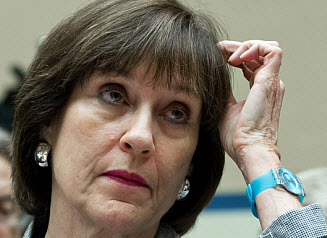 As the IRS targeting scandal continues to unfold or, not unfold due to what I believe to be the willful obstruction of the house Ways and Means committee investigation by the Obama regime, Eric Holder’s Department of Injustice and most importantly, by Lois Lerner herself, the complete lack of credibility surrounding lost evidence is something which only the mainstream media seems able to ignore.
Emails. 2 years worth of lost emails. It’s just too incredible to be believed that a computer hard drive crash, just ten days after first being asked about those emails wiped them out for all time. Further, it is implausible to be asked to believe that six other IRS executives had THEIR hard drives crash in concert with the Lerner hard drive.
In this day and age, when cyber fingerprints can be lifted from even the most savagely destroyed hard drive and information recovered by experts in the private sector not to mention the public sector, such as the FBI, it is beyond even the pale to be told that hard drives from the IRS and top executives at the IRS at that, could not be forensically brought back to life and the data recovered.
When American citizens, fearing that day when the IRS comes knocking are required to have a full seven years of their lives ready to turn over to that very entity of the government, the entity that can ruin their futures, it is incomprehensible that the IRS itself is only required to keep THEIR data for a brief, fleeting six months and even MORE incomprehensible that the IRS would be using easy to destroy TAPE as their back up system.
Furthermore, it absolutely flies in the face of mere coincidence that, given the timing of the supposed hard drive crashes of the very six executives of the IRS AND that of Lois Lerner’s hard drive, just days after first being asked about such a specific time period as 2009-2011 and ONLY that period of emails, from ALL SIX subjects were lost for all time, that the very company contracted to back up and SAVE their emails, SonaSoft, had THEIR contract CANCELLED by the IRS.
To be expected to believe this line of crap is seriously insane.
Those emails exist….
Let’s pray for motherhood. 6-25-14 http://anticorruptionact.org/
Let’s pray for motherhood.
Father, today we come to you to thank you for all your blessing and pray for all the mothers in the world. We praise the woman that become mothers and preserve the existence of humanity. They are your creation and to be a mother is a holy privilege and a gift from you my Lord; becoming a mother is the greatest joy that a woman can have in her life, when she gave birth we know that the Children are a gift from you my Lord and we are full of joy that a child is born into the world; they are an heritage of you my LORD: and the fruit of the womb is her reward.
Father you specially designed the woman physically and emotionally to not only conceive and bear a child but to nurture and raise a child as well, we ask for your blessing and pray for your protection of the whole family and let nothing compromise the love and duty to rise the child under your laws and principles. Mothers should be willing to put God first and seek to dedicate her child to the service of the Lord.
Lord blessed is the mothers that follow you and give their Childs the knowledge of the kingdom of God. Amen.
Mothers are very special, God could not be everywhere, and therefore he made mothers.
Jewish Proverb
The hand that rocks the cradle is the hand that rules the world.
